
Quality Control & Testing Center
At Zhejiang Hongce Cable, electrical safety and long-term performance are our top priorities. Our world-class cable quality control laboratory, backed by stringent IEC / GB testing standards and full-process monitoring, ensures every cable leaving our factory delivers superior, reliable power for global power-transmission, industrial, and commercial projects.
Advanced Laboratory & Core Testing Equipment
To achieve the highest grade of insulation quality and physical performance, we have invested in a modern testing laboratory equipped with the following core precision testing equipment:
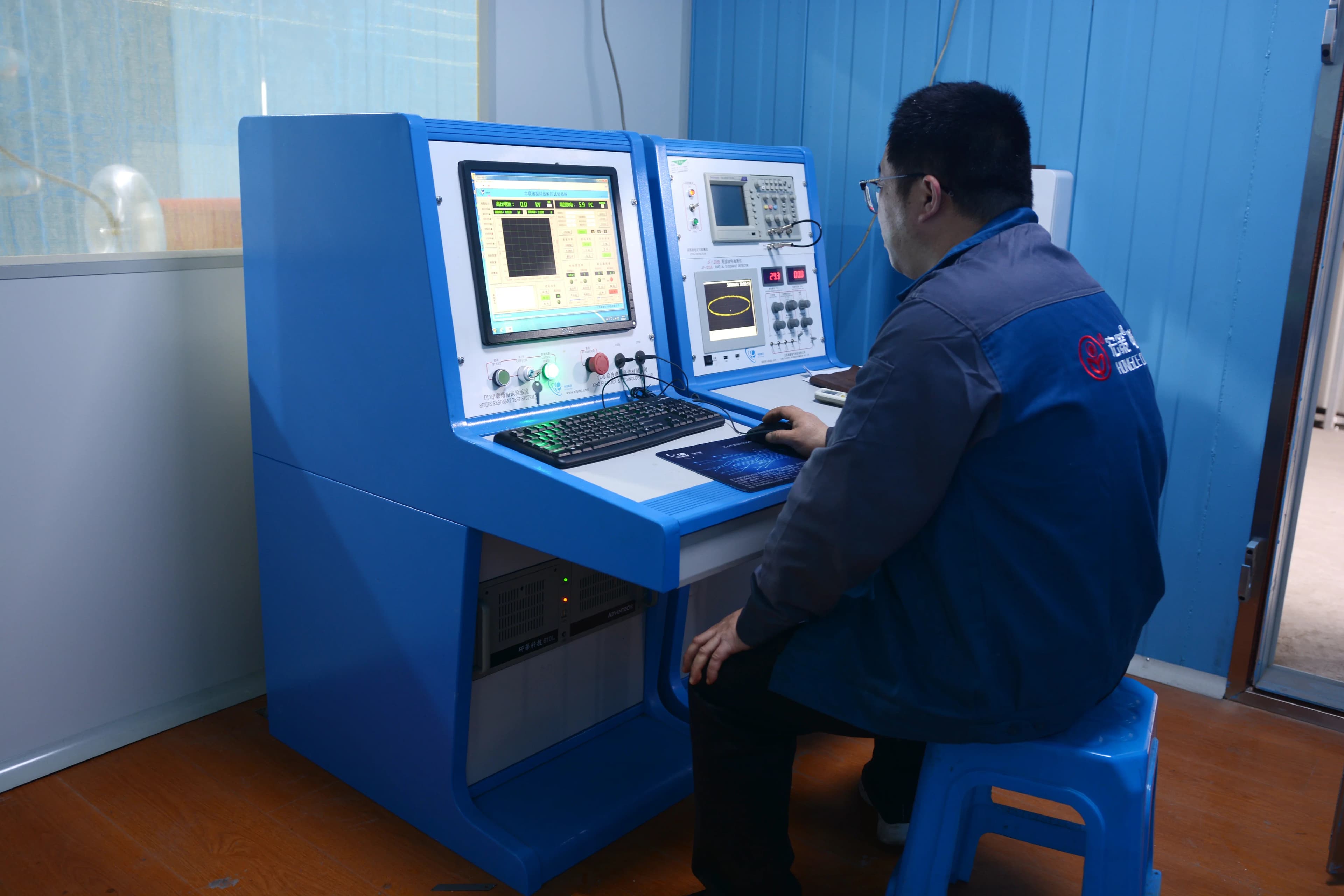
— Faraday Cage Shielded Partial Discharge Laboratory: our purpose-built Faraday-cage shielded laboratory provides an electromagnetically interference-free, controlled testing environment for medium- and high-voltage power cables. Technicians use a partial discharge testing system integrated with real-time data acquisition and oscilloscope monitoring, detecting extremely small discharge activity strictly per IEC 60885 and GB standards — identifying and eliminating potential defects in the insulation layer. The lab is equipped with LGJ high-voltage cable testing equipment for rigorous cable withstand-voltage and dielectric strength testing, ensuring products safely handle rated voltage and transient surges.
— High-Precision Conductor DC Resistance Tester: verifying conductivity and material purity of every conductor is the cornerstone of our quality inspection. In a laboratory with real-time temperature monitoring, we precisely correct data to the 20°C standard reference value, accurately measuring copper / aluminum conductor resistivity to ensure conductivity testing fully complies with IEC 60228 and GB/T 3956 standards.
— SYX-Series Aging Test Chamber: to verify cable thermal endurance, we use the SYX aging test chamber to simulate thermal stress on cable materials during long-term operation. Insulation and sheath material stability is evaluated under controlled high temperatures, ensuring compliance with IEC / GB cable heat-resistance test requirements and guaranteeing service life in demanding industrial environments.
— Single-Column Electronic Tensile Testing Machine: to verify mechanical reliability, we apply controlled tension to samples, precisely measuring tensile strength, elongation at break, and material elasticity. This ensures cables withstand the physical stresses of installation, movement, and long-term operation, preventing failure.
7-Step End-to-End Quality Control Process
We implement full-process online and offline quality inspection from raw-material inbound through finished-product outbound — no non-conforming product passes to the next process step.
Step 1 — Wire Drawing (oxygen-free copper rod): inbound inspection of φ8.0mm copper rod surface quality (no oil, oxidation, or cracks). Online monitoring of single-wire diameter and ovality, with automatic tension control and wire-break protection. Sampling tests verify finished copper wire DC resistance and mechanical properties, ensuring batch conductivity ≥100% IACS. Standards: GB/T 3956-2008, GB/T 4909 series.
Step 2 — Conductor Stranding: strict control of lay length, stranding direction, compaction factor, and sector-conductor forming dimensions. Stranded conductor DC resistance checked; surface verified free of broken / jumped wires and oxidation. Standards: GB/T 3956-2008, GB/T 4909.5-2009, GB/T 12706.1-2020.
Step 3 — Insulation Extrusion: online spark test applies power-frequency spark voltage of 3kV/mm for 100% detection of insulation pinholes and damage. Real-time monitoring of insulation thickness, eccentricity, and extrusion temperature / pressure / speed stability. Standards: GB/T 12706.1-2020, GB/T 2951.11-2008, GB/T 3048 series.
Step 4 — Cabling: structural inspection of cabling lay length, fill factor, and tape overlap rate; roundness and core arrangement order confirmed. Cores verified free of eccentricity and damage, tapes free of wrinkles. Standards: GB/T 12706.1-2020, GB/T 2951.21-2008.
Step 5 — Sheath Extrusion: sheath thickness and concentricity monitored; online-printed model number and meter marking verified clear and accurate. Samples taken for sheath adhesion, mechanical-physical property, and shrinkage testing. Standards: GB/T 12706.1-2020, GB/T 2951.13-2008, GB/T 6995.2-2008.
Step 6 — Finished Product Testing: every drum undergoes full routine inspection — structural dimension measurement (projector / micrometer), electrical performance (partial discharge, power-frequency withstand voltage), mechanical-physical performance (heat aging, low-temperature bending), and flame-retardant / fire-resistant testing (vertical burning, bunched burning). Standards: strict compliance with GB/T 12706.1, GB/T 3048 series, GB/T 19666-2019 and other core national standards.
Step 7 — Packaging & Delivery: final factory inspection verifies cable length per order, drum neatness, and moisture-proof sealing-film integrity. Certificate information, strapping, and shipping marks verified to meet transport-protection and identification requirements. Standards: GB/T 6995 series (marking and identification).
Need Cable That Passes Every Test?
Share your project's quality and certification requirements. Our QC engineers respond with full test documentation and a technical proposal within 24 hours..