
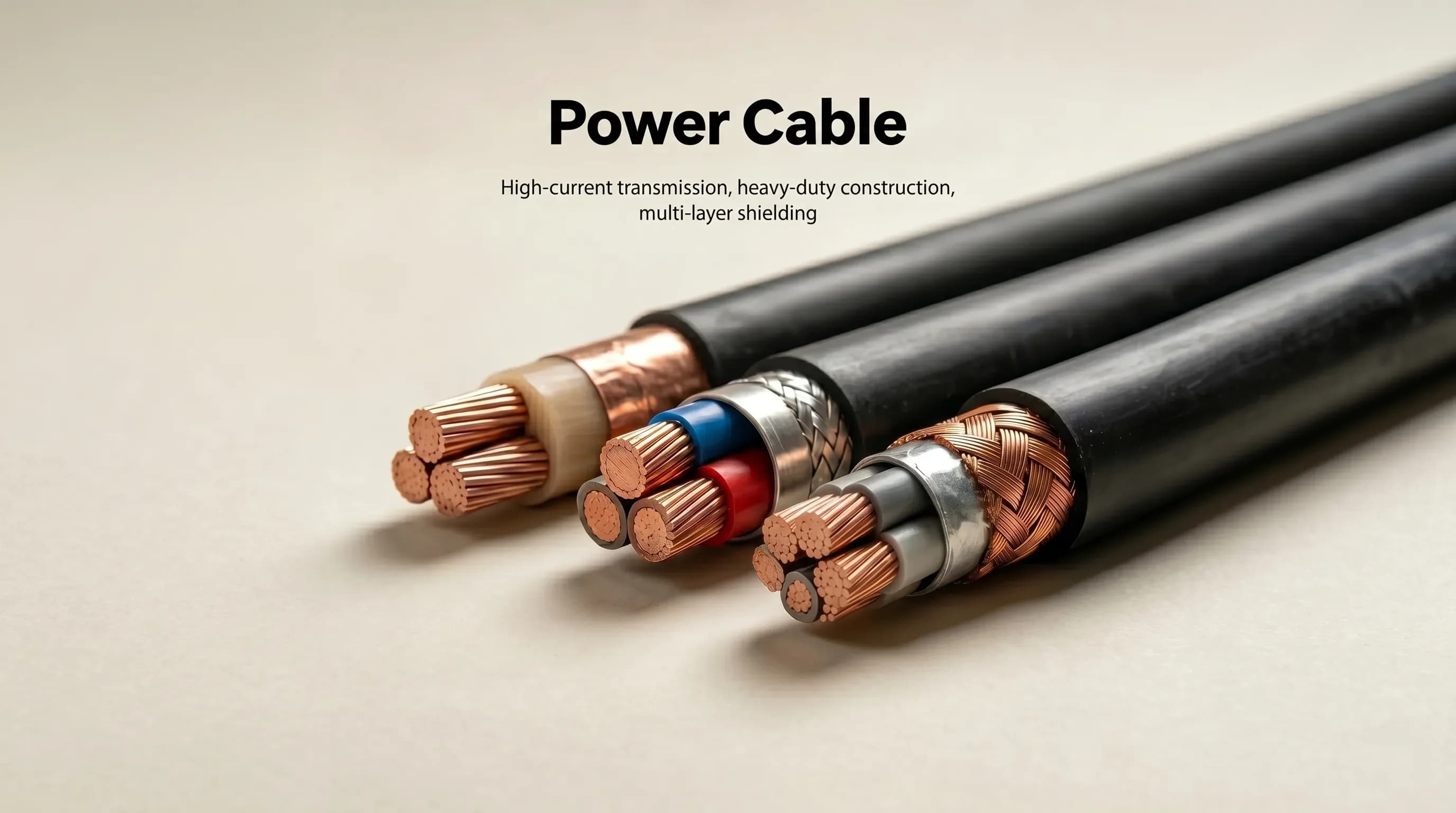
WDZ-YJY 0.6/1kV Copper XLPE Halogen-Free Low-Smoke Flame-Retardant Power Cable
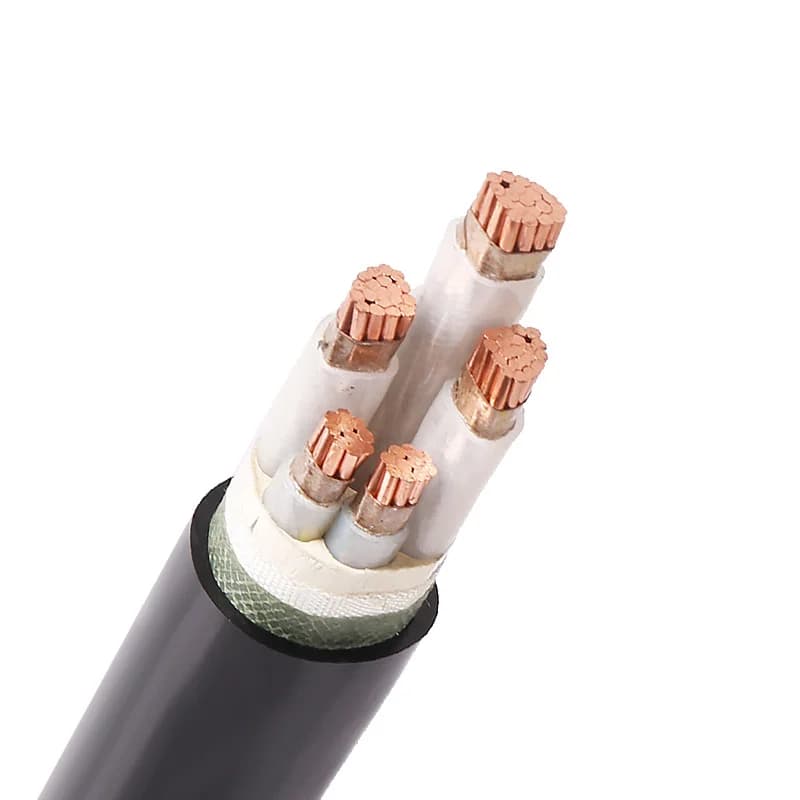
When the cable runs through a building zone where evacuation has to happen during a fire — shopping malls, hospitals, transit stations, public assembly — local codes increasingly forbid halogen-content insulation that releases toxic smoke. WDZ-YJY replaces the conventional PVC sheath with halogen-free flame-retardant polyolefin (HFFR).
Technical Specifications
| Conductor material | Annealed copper, Class 2 stranded |
| Insulation | XLPE |
| Outer sheath | Halogen-free flame-retardant polyolefin (HFFR) |
| Flame retardance | IEC 60332-3-22 Category B |
| Smoke density | < 60% transmittance (IEC 61034) |
| Halogen content | < 0.5% (IEC 60754-1) |
| pH of evolved gas | > 4.3 (IEC 60754-2) |
| Rated voltage U₀/U | 0.6/1 kV |
| Max conductor temperature | 90 °C |
| Cross-sections available | 1.5 – 400 mm² |
Compliance Standards
- ✓IEC 60502-1
- ✓IEC 60332-3-22 Category B (Flame propagation)
- ✓IEC 61034 (Smoke density)
- ✓IEC 60754-1 / 2 (Halogen, acid gas)
- ✓GB/T 19666 (HFFR cable classification)
Overview
Conductor and XLPE insulation are identical to YJV. The differentiation is the outer sheath: HFFR (halogen-free flame-retardant) polyolefin compound that resists flame propagation per IEC 60332-3-22 Category B and emits low smoke + zero halogen acid gas under fire. Used wherever local building codes prohibit halogen-content cable on life-safety grounds.
Key Features
Halogen-free + low-smoke + flame-retardant
All three life-safety properties in one outer sheath compound — no need to specify separate FR and LSZH variants.
Building-code aligned for SEA
Specification matches the LSZH cable requirements that Indonesian, Thai, and Philippine fire codes now apply to high-occupancy buildings.
Compatible with YJV terminations
Outer dimensions match YJV at every cross-section — substitution does not require new lugs, glands, or terminations.
Applications
Public assembly buildings
Shopping malls, transit stations, airports, hospitals — anywhere evacuation must be safe during a cable fire.
High-occupancy commercial
Office building risers and tenant distribution where local code mandates LSZH on life-safety circuits.