
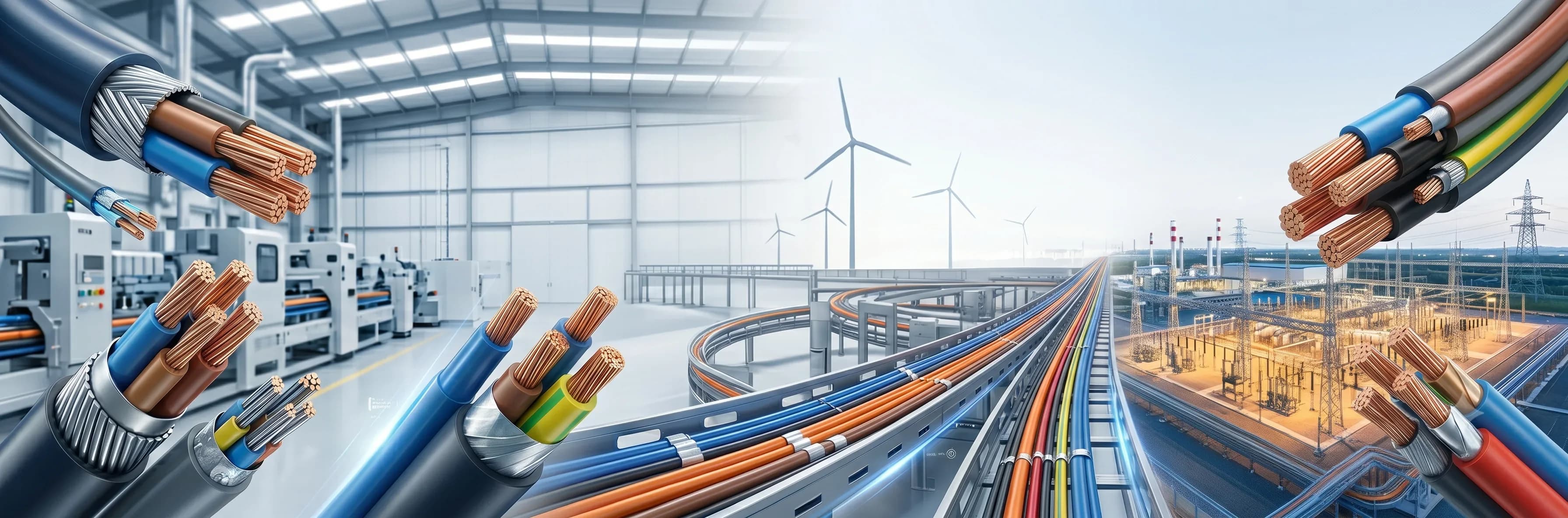
BS, IEC, GB: How Buyer Type Decides MV Cable Standards in SEA
Why the standards line in your tender BOQ matters less than who wrote it.

Most discussions of medium-voltage cable standards in Southeast Asia treat BS 7870, IEC 60502-2, and GB/T 12706.2 as a technical choice. They're not. They're a sourcing choice — and the sourcing decision happens upstream, at the buyer type. Walking through a real 6.35/11kV YJLY project supplied to a Malaysian private developer shows where Chinese manufacturers actually fit in the ASEAN MV procurement landscape.
Why Reading the Tender Author Matters More Than Reading the Standard
If you've reviewed a few Southeast Asian medium-voltage cable tenders, you've probably noticed the standards line is rarely consistent. One Malaysian project lists BS 7870. Another lists IEC 60502-2. A third — and this is where things get interesting — directly references GB/T 12706.2 with no "or equivalent" qualifier attached.
The conventional discussion of these three standards focuses on technical differences: insulation testing methods, conductor temperature limits, armor dimensions, screen overlap requirements. These differences exist but they're small. XLPE insulation behaves the same way regardless of which standard a manufacturer follows; a 150mm² stranded aluminum conductor has the same DC resistance whether tested per BS, IEC, or GB method.
The more useful question is upstream: who wrote that standards line in the BOQ? Once you know that, the standard choice usually explains itself — and the supplier pool you can credibly tap becomes clear.
We've seen consistent patterns across the projects we've supplied. Public utility tenders lock the standard hard. Private developer tenders — industrial parks, data centers, real estate developments, mining concessionaires — operate by a different rulebook. The two buyer types are effectively different markets, and the standards line in the tender is downstream of that distinction.
This guide walks through how that distinction plays out for MV cable (6kV–35kV) in ASEAN, where Chinese manufacturers like ourselves fit in the picture, and what an unfamiliar standards reference in a tender actually tells you about your sourcing options.
The Standards Triad in ASEAN MV
Three standards families dominate medium-voltage cable specifications in ASEAN markets.
IEC 60502-2 is the international standard for power cables with extruded insulation, rated 6kV to 30kV. It's the default for most public utilities in Indonesia (PLN), Vietnam (EVN), Thailand (EGAT, PEA, MEA), the Philippines (Meralco, NGCP), and parts of Cambodia, Laos, and Myanmar. International EPC contractors operating across borders typically reference IEC.
BS 7870 is the British Standard for distribution cables from 600/1000V up to 33kV. Tenaga Nasional Berhad (TNB) in Malaysia, SP Group in Singapore, and most government-aligned utilities in Brunei use it. The standard inherits structural conventions of British colonial-era electrical engineering — voltage classes (6.35/11kV instead of IEC's 6/10kV), armor specifications, drum-handling conventions — that persist because the existing network infrastructure was built to them.
GB/T 12706.2 is the Chinese national standard for 6kV–35kV power cables. Structurally aligned with IEC 60502-2 but adapted to Chinese manufacturing practice, the testing protocols of CCC (China Compulsory Certification) and CQC (China Quality Certification), and Chinese regulatory documentation requirements. Originally domestic-only, increasingly referenced in SEA tenders where the buyer is China-aware.
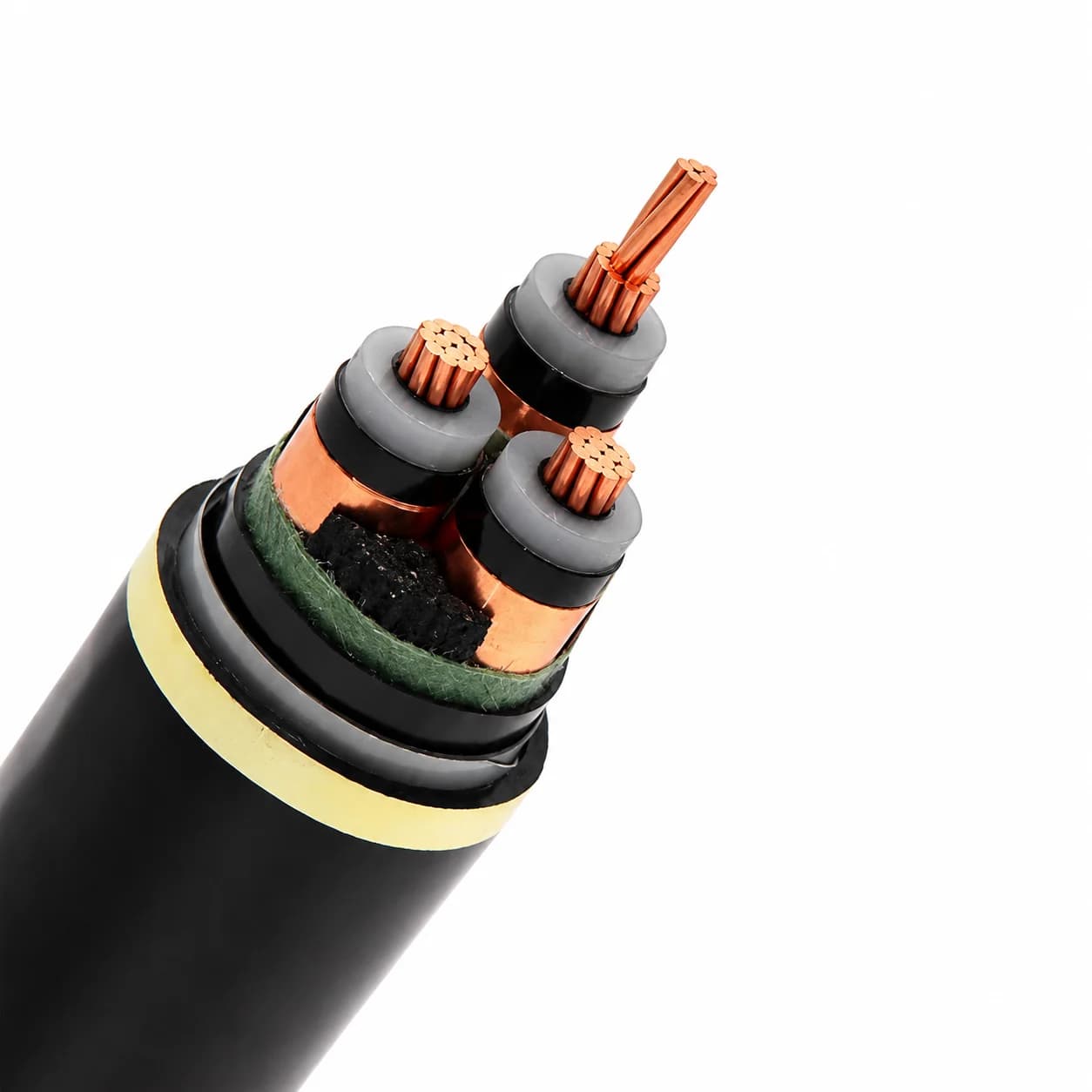
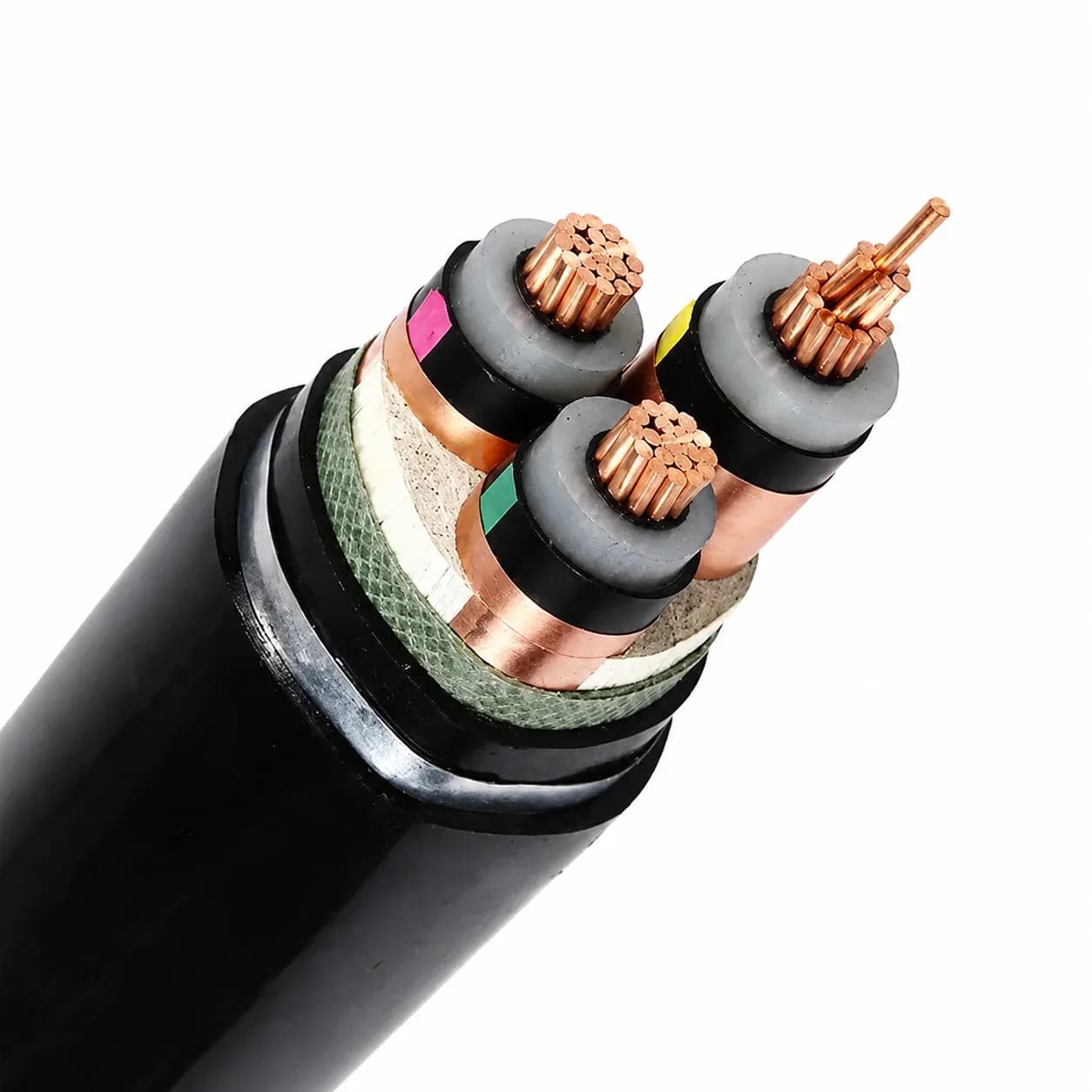
Technically, these three converge on the same basic cable: XLPE insulation, semi-conductive screens, copper or aluminum conductor, metallic screen (copper tape or wire), outer sheath. The differences are dimensional tolerances, test sequence and pass criteria, and certification flow. Small enough that a competent manufacturer can produce to any of them. Large enough that compliance documentation cannot be cross-mapped without third-party verification.
What matters in practice is which standard a buyer's quality assurance team can audit against. That determines which manufacturers they can buy from — and that's a sourcing decision, not a technical one.
Public Utility Tenders: Standards Are Locked
When a Malaysian project's electrical specification references BS 7870, it isn't the consulting engineer's personal preference. It's procurement policy at the utility level, embedded in boiler-plate tender language that every consultant uses and every contractor accepts.
TNB Malaysia tenders specify BS 7870 (often calling out specific clauses for 6.35/11kV armored constructions). PLN Indonesia tenders specify IEC 60502-2 with PLN-supplementary requirements (SPLN). EVN Vietnam tenders reference IEC 60502-2 with TCVN overlay. These references aren't negotiable the way prices or schedules are negotiable. They reflect three things:
Network compatibility — TNB's existing 33kV/11kV distribution network was built to BS dimensions. New cable must fit existing terminations, glands, joints, and drum-handling equipment. Substituting an IEC-spec cable means substituting accessories too, and that's a much bigger change than buying the cable.
Type approval pipeline — Public utilities maintain approved supplier lists. Getting added requires sample testing through approved labs (often BASEC for BS-aligned utilities, KEMA or TÜV for IEC-aligned). Adding a supplier outside the standards family is a multi-year qualification process, not a single tender exercise.
Regulatory cover — Utility procurement officers face audit on every purchase. Buying outside the spec'd standard is a personal career risk. Nobody volunteers to be the engineer who chose a non-compliant cable that later fails in service.
For Chinese manufacturers, this means BS-tender public utility markets — Malaysia TNB, Singapore SP Group, parts of Brunei — are effectively closed unless we hold BASEC or accepted equivalent BS certification. Most of us, including our own factory, don't. Our certification footprint is CCC and CQC, with IEC equivalence available through SGS, TÜV, or comparable third-party verification per product family.
This is the structural reason most Chinese MV cable exports to ASEAN land in Indonesia, Vietnam, the Philippines, and Thailand — IEC-tender markets — rather than Malaysia and Singapore.
Private Developer Tenders: Where Flexibility Lives
Private developer projects in ASEAN — industrial parks, data centers, manufacturing facilities, real estate developments, mining operations — operate by completely different rules.
The lead electrical engineer on a private developer's project has substantially more decision authority than their counterpart at a public utility. They're optimizing for project cost, schedule, and their own technical confidence in the supplier — not for compliance with a multi-decade public procurement framework.
This is where Chinese standards actually land in BS-traditional countries.
A concrete recent case: a private developer in Malaysia, building distribution infrastructure for an industrial site, specified YJLY 6.35/11kV 3×150mm² with double-layer copper tape shielding, supplied to GB/T 12706.2-2020. The tender document referenced GB/T 12706.2 and GB/T 3955-2009 (the Chinese aluminum conductor standard) directly. No BS 7870 reference. No IEC 60502-2 equivalent clause. No "or approved equivalent" qualifier.
What made this work, when most Malaysian tenders couldn't accommodate GB:
The developer's lead engineer had prior experience with Chinese-standard cable from earlier projects. He could read GB/T 12706 documentation directly — and the structural and testing requirements are close enough to IEC 60502-2 that an engineer with IEC familiarity can audit either side.
The project was private installation behind the utility connection point — no TNB approval needed for internal MV distribution. Once the cable terminates inside the developer's own substation, the regulatory framework shifts.
The cost saving was material — typically 15–25% versus a BS-certified equivalent from European or Korean manufacturers — and the developer was willing to absorb the certification risk for that saving.
The voltage class (6.35/11kV) carried over from BS conventions even when the certification standard shifted to GB. This is common in BS-traditional countries: voltage class is part of network design (set by transformer ratings and existing infrastructure), while certification standard is part of procurement specification. They're set independently.
This pattern — voltage class follows network, certification standard follows buyer preference — is the actual flexibility space for Chinese manufacturers in BS-country private projects. The decision isn't "BS or IEC or GB" as abstract choices. It's: where the buyer's engineer can credibly audit non-standard documentation, GB or IEC works for everyone involved.
What a GB/T 12706 Spec Sheet Actually Specifies
The technical content of a GB/T 12706.2 specification for 6.35/11kV MV cable looks much like an IEC 60502-2 specification with Chinese-language documentation. Walking through the actual spec sheet from the Malaysian project gives a sense of the precision level required.
Conductor: Compressed circular aluminum conductor per GB/T 3955-2009, 37 strands of 2.25mm wire, reference diameter 14.33mm, maximum DC resistance 0.206 Ω/km at 20°C. (IEC 60502-2 equivalent: Class 2 stranded aluminum per IEC 60228, same resistance value, same stranding pattern.)
Conductor screen: Thermosetting semi-conductive material, extruded, black, minimum thickness 0.5mm, average 0.7mm, nominal 0.75mm. Three-layer co-extrusion with insulation and insulation screen — the surface-finish quality that this co-extrusion process produces is the same regardless of which standard governs the documentation.
Insulation: Extruded XLPE, natural color, void- and inclusion-free. Eccentricity less than 6% (target less than 5%); concentricity above 94% (target above 95%). Minimum thickness 3.4mm, average 3.5mm, nominal 3.6mm. Reference diameter over insulation: 23.0mm.
Insulation screen: Thermosetting semi-conductive, strippable without tools or heat, black, minimum 0.5mm, average 0.65mm.
Metallic screen: Annealed copper tape, double layer (joints welded), right-hand spiral wind, individual tape thickness 0.1mm, width 30mm, minimum overlap 16–17%. The double-layer construction increases shielding redundancy and short-circuit current capacity over single-tape shields, which matters more on long feeder runs.
Filler and binder: Non-hygroscopic white PP rope filling for circularity; two layers of white nonwoven tape (0.14mm × 70mm, left-hand wind, 7–13% overlap) over the core assembly.
Outer sheath: Extruded MDPE ST7 compound, black, minimum 2.0mm, average 2.3mm, nominal 2.4mm. Final cable outer diameter approximately 59.3–59.4mm.
Acceptance testing: AC voltage withstand at 21kV for 5 minutes; partial discharge at 1.73 U₀ (10.4kV) less than 10pC; hot-set test at 200°C for 15 minutes — elongation under 20N/cm² load less than 175%, set after cooling less than 15%.
This dimensional and procedural specificity is identical between GB/T 12706.2 and IEC 60502-2 — both descend from the same engineering tradition. The differences sit in the test procedure documentation and the certification path (CCC plus CQC vs KEMA or TÜV witness). For a buyer's engineer who can read the spec, the cable is the cable. The standards reference on the front page mostly determines where the certification paperwork comes from.
Honest Note on Cert Footprint for Chinese Manufacturers
The Chinese cable manufacturing industry, including our factory, typically holds CCC and CQC. CCC is mandatory for sale within China for power cable products in many categories; it demonstrates compliance with Chinese national standards including GB/T 12706.2. CQC is voluntary and indicates compliance with stricter quality controls beyond the CCC minimum, also primarily aligned with GB standards.
IEC equivalence is generally obtained through SGS, TÜV, BV, or comparable per project or per product family — demonstrating that a specific product variant meets IEC 60502-2 requirements without holding standing IEC manufacturer certification.
What we generally don't hold: BASEC (the British Approvals Service for Cables) certification. BASEC is the BS standards gatekeeper. The certification is expensive, slow to acquire, and only commercially worthwhile for manufacturers committed to BS-tender public utility supply. Most Chinese manufacturers haven't taken that path, including ours.
For ASEAN buyers, the practical implication of this footprint:
At an IEC-aligned utility (PLN, EVN, EGAT, Meralco, NGCP), Chinese suppliers with CCC, CQC, and project IEC equivalence verification can supply directly. The documentation chain is standard and the supplier qualification process is well-trodden.
At a BS-aligned utility (TNB, SP Group, government-side Brunei), Chinese suppliers generally cannot supply directly without BASEC or accepted BS-equivalent certification. This is structural, not negotiable on a single project.
At a private developer with internal MV distribution and an engineer who can audit non-BS documentation, the choice opens up. The 15–25% cost difference versus BS-certified suppliers is often material at industrial-park or data-center scale.
The honest answer for buyers writing tenders in BS-traditional countries: if you're going to specify GB or IEC alongside or instead of BS, your engineering team needs the capability to audit the non-BS documentation directly. Otherwise the cost saving disappears in qualification delays and rework.
Practical Decision Framework
A working matrix for ASEAN procurement teams writing or reviewing MV cable tenders:
Buyer type | Country example | Typical standard | Chinese manufacturer fit |
|---|---|---|---|
Public utility | Indonesia (PLN) | IEC 60502-2 + SPLN | Direct — IEC equivalence accepted |
Public utility | Vietnam (EVN) | IEC 60502-2 + TCVN | Direct |
Public utility | Thailand (EGAT / PEA / MEA) | IEC 60502-2 | Direct |
Public utility | Philippines (Meralco / NGCP) | IEC 60502-2 | Direct |
Public utility | Malaysia (TNB) | BS 7870 | Indirect — requires BASEC or equivalent |
Public utility | Singapore (SP Group) | BS 7870 | Indirect |
Private developer | Any ASEAN country | Flexible | Direct — GB or IEC depending on engineer capability |
Three checkpoints for tender writers and BOQ reviewers:
Identify the buyer type before locking the standards reference. If the project is private and the in-house engineering team can audit non-BS documentation, consider whether specifying GB or IEC opens the supplier pool meaningfully. If it's public utility, the standard is already chosen for you.
When specifying GB or IEC in a BS-traditional country, verify your project engineer can actually audit non-BS test reports directly. If your in-house capability is BS-only, the savings will be consumed by qualification delays and external review costs.
Treat voltage class (6.35/11kV vs 6/10kV) as a network design decision, not a certification standard decision. Voltage class is set by what your transformers, switchgear, and existing infrastructure use. It's independent of which standards body certifies the cable. Don't conflate the two when writing a BOQ.
The unspoken rule across most ASEAN MV procurement: the tender doesn't lie, but it doesn't tell the whole story. The standards reference tells you what documentation will be required. The buyer type tells you whether the requirement is binding or replaceable.
If you're writing a tender, choose the standard that matches your sourcing constraints. If you're reading one, look at who wrote it before assuming the standards reference is the binding constraint.
For project-specific cable schedule review or to discuss compliance pathways across BS, IEC, and GB references in your specific procurement context, contact our engineering team.
About the Author
Liangce Chi currently serves as Southeast Asia Market Analyst at Zhejiang Hongce Cable Co., Ltd. His work involves in-depth research covering power infrastructure construction across Southeast Asia, price trends of bulk commodities, and cross-border cable trade compliance. Combining insights from macroeconomic data with extensive hands-on cross-border trade experience, Liangce Chi goes beyond theoretical research and conducts on-site assessments of industrial manufacturing investment climates in Thailand, Vietnam, Indonesia and other Southeast Asian markets. Drawing on his professional work, he secured bulk orders from well-established Thai enterprises for Zhejiang Hongce Cable. This landmark achievement has laid a solid quantitative foundation for the company to further expand its market share of industrial building support cables in Thailand and the broader Southeast Asian region.

Frequently Asked Questions
Can Chinese cable manufacturers supply to BS 7870 utility markets like TNB Malaysia or SP Group Singapore?+
What's the practical difference between IEC 60502-2 and GB/T 12706.2 for a 6.35/11kV cable spec?+
Why do Malaysian tenders specify 6.35/11kV instead of IEC's 6/10kV?+
If I'm a procurement engineer at a private developer in Southeast Asia, when should I specify GB or IEC over BS?+
Keep Reading
2026 Grid Hardening: YJV22, WDZN-YJY & JKLYJ Cable Standards
YJV22 armored, WDZN-YJY fire-resistant, and JKLYJ overhead — three cable families that solve three different physical problems in Southeast Asia's 2026 grid hardening cycle. Specifying the wrong family doesn't show up as a budget overrun; it shows up as rework 2 years later. Selection logic, IEC standards, and procurement notes for B2B buyers and design engineers.
Flame Retardant vs Fire Resistant Cable: Standards, Testing & Selection Guide
Flame retardant vs fire resistant cable — IEC 60332 vs IEC 60331 standards, BS 6387 testing methodology, and how EPC engineers spec WDZ-YJY versus WDZN-YJY for tunnels, hospitals, and high-rises. Eight-scenario selection matrix plus an East China metro case.