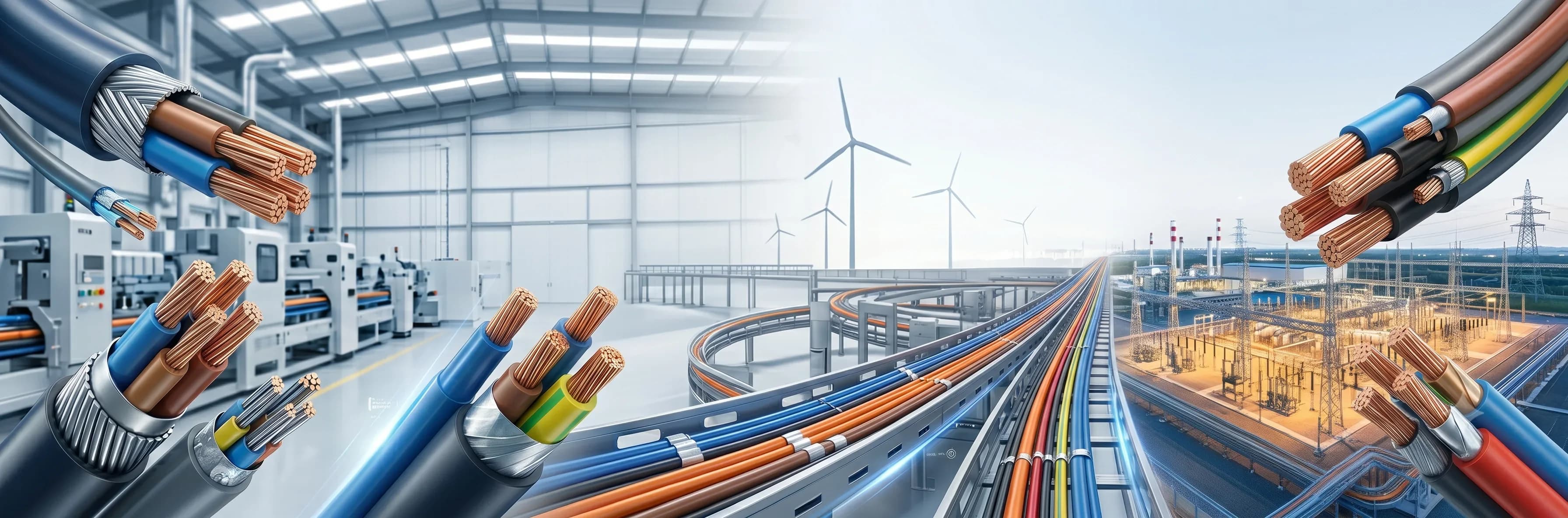
0.6/1kV LSZH Power Cables for Data Centres: EPC Checklist
A Practical Guide to Cable Specifications, Fire-Performance Evidence and EPC Approval for Data Centre Projects
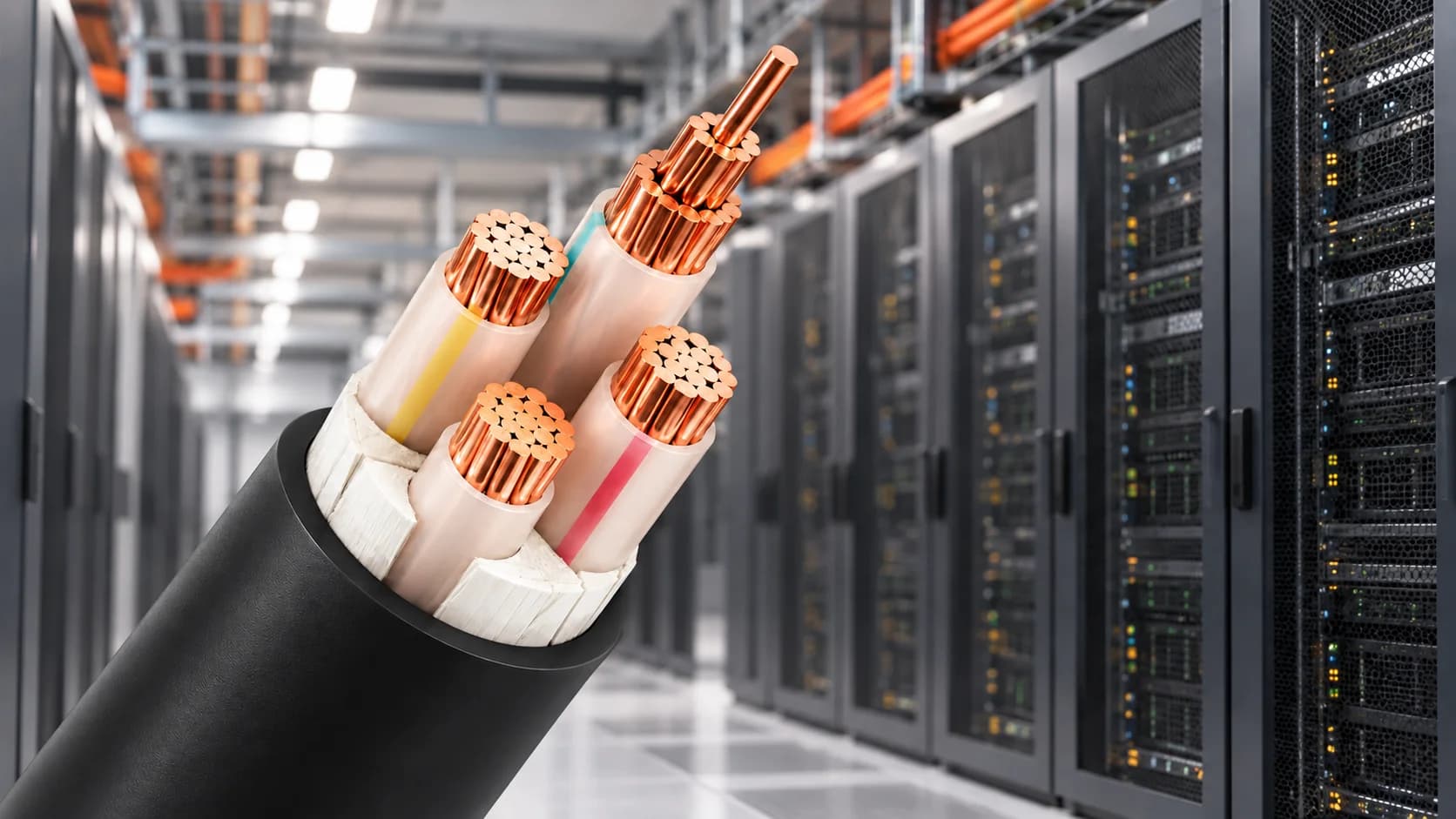
Learn how to specify 0.6/1kV LSZH power cables for data centres. This guide covers cable construction, fire-performance tests, installation conditions and EPC approval documents, with published Hongce product specifications and a China Unicom Deqing data centre project reference. Use the checklist to compare technical submissions, identify deviations and prepare a complete RFQ.

Where 0.6/1kV LSZH Cables Fit in a Data Centre
Fixed Power Distribution and Equipment Feeders
Depending on the design, low-voltage power cables connect switchgear, UPS equipment, distribution panels and auxiliary loads. These circuits have different operating conditions and protection requirements. A cable suitable for one feeder is not automatically suitable throughout the facility.
International industry references reflect this range. Eland Cables’ data centre overview distinguishes medium-voltage connections, low-voltage distribution and application-specific constructions. Buyers should therefore define the circuit before comparing products.
Keep Power-Cable Categories Separate
This article concerns fixed distribution cables, rather than server power cords, Ethernet cabling or fibre optics. UPS battery connections also require a separate review of DC voltage, polarity, flexibility and termination requirements. An AC voltage designation alone is insufficient evidence for that duty.
Specify the Complete Cable Construction
Voltage, Conductors and Core Arrangement
In a U₀/U designation of 0.6/1kV, U₀ identifies the rated voltage between a conductor and earth or metallic screen, while U identifies the voltage between conductors. Confirm compatibility with the system voltage and earthing arrangement.
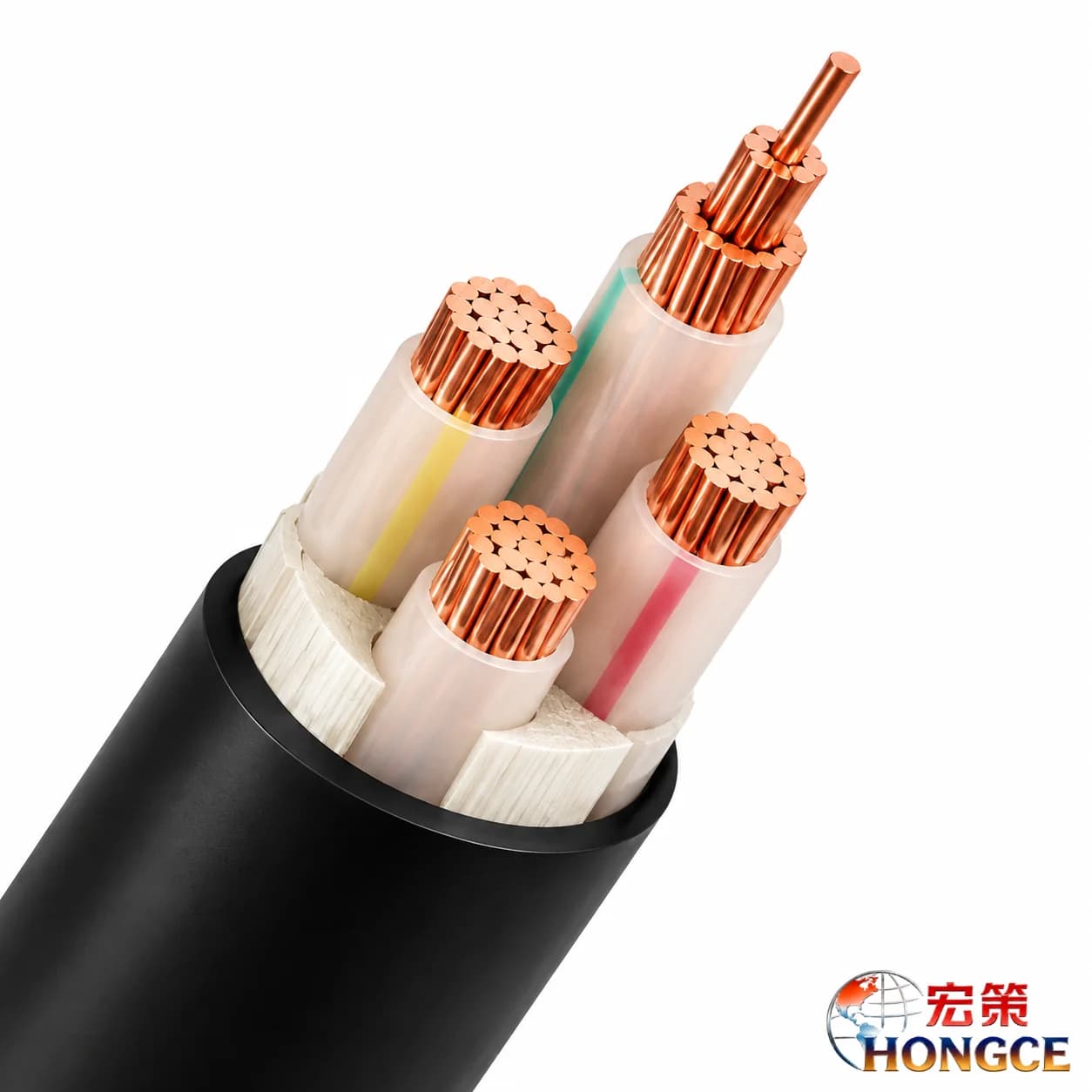
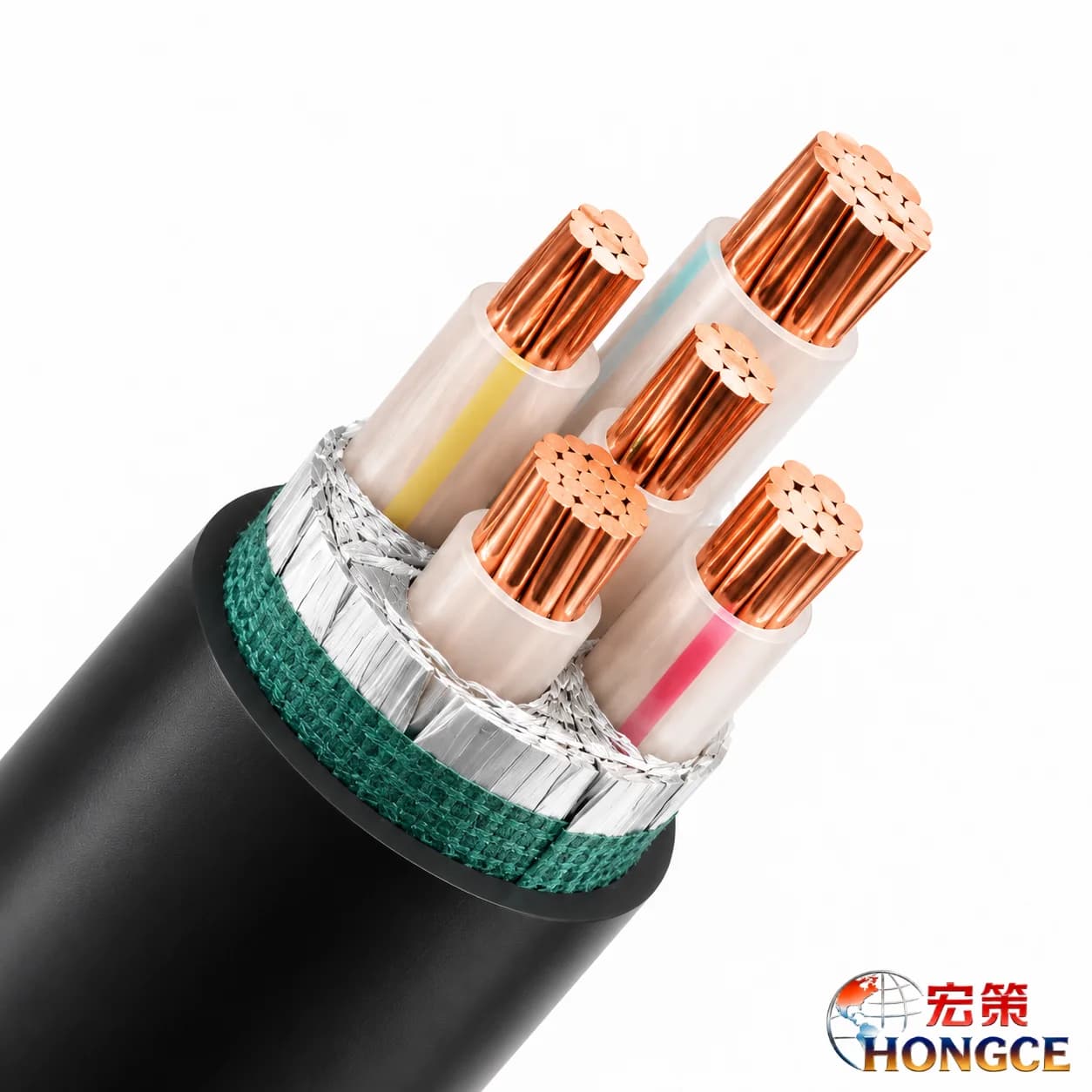
Specify conductor material, class, core count and cross-section. Include neutral and protective-conductor requirements rather than assuming that a standard core arrangement will suit every circuit. IEC 60228:2023 addresses conductor sizes, construction and resistance; a material-purity claim does not replace those checks.
Also confirm how the proposed conductor will connect to equipment. Class 1, Class 2 and flexible constructions have different termination considerations. The offered conductor, lug, gland and equipment terminal should form a compatible assembly. Do not treat conductor flexibility as evidence that the complete cable is suitable for repeated movement.
XLPE Insulation and LSZH Sheath
XLPE insulation provides the electrical barrier around the conductor. The outer sheath addresses separate environmental and fire-performance requirements. An XLPE-insulated cable may have a PVC, PE or LSZH sheath, so “XLPE cable” is an incomplete purchasing description.

The following parameters are published for Hongce WDZ-YJY 0.6/1kV LSZH power cable. They are product-reference values, not confirmed supply specifications for the Deqing project discussed below.
Parameter | Published WDZ-YJY value | EPC verification point |
|---|---|---|
Rated voltage | 0.6/1kV | Match system and earthing conditions |
Conductor | Copper; Class 1 or Class 2 | Confirm availability for the selected configuration |
Insulation | XLPE | Check construction drawing and thickness |
Outer sheath | LSZH polyolefin | Confirm required smoke and gas-emission evidence |
Maximum continuous conductor temperature | 90°C | Not the permissible ambient temperature |
Maximum short-circuit conductor temperature | 250°C, up to 5 seconds | Verify fault current and clearing time |
Published size range | 1.5–630 mm² | Confirm the offered core count and size combination |
Listed product standard | IEC 60502-1 | Agree applicable edition and deviations |
Ampacity, outer diameter and bending radius | Obtain for the selected construction | Do not infer from the family name |
The official IEC 60502-1:2021 scope describes construction, dimensional and testing requirements for the voltage classes it covers. Product compliance still needs supporting evidence for the offered construction.
Verify Fire Performance Against the Actual Requirement
Separate Flame Spread, Smoke and Gas Tests
LSZH describes a group of material and emission characteristics. It is not a universal fire-performance approval. Prysmian’s AFUMEX technical overview provides industry context for low-smoke, halogen-free technology; its product claims should not be transferred to another manufacturer’s cable.
Performance | Relevant reference | What the buyer should establish |
|---|---|---|
Single-cable flame propagation | Required edition, specimen and result | |
Bunched-cable flame spread | IEC 60332-3 series | Required category and construction coverage |
Smoke density | Test arrangement and acceptance criterion | |
Combustion-gas characteristics | IEC 60754-1 and IEC 60754-2 | Required halogen-acid-gas, acidity and conductivity evidence |
Circuit integrity during fire | Applicable IEC 60331 part or specified alternative | Conditions, duration and product coverage |
A single-cable flame test does not establish performance for a cable bunch. Likewise, smoke testing does not demonstrate continued electrical operation during fire. Ask for the specific tests required by the tender, including applicable amendments.
Reports should identify the tested construction and the basis for covering other sizes or configurations. Similar model names are not enough to establish that relationship. For projects referencing local fire codes or European reaction-to-fire classifications, obtain the applicable project requirements rather than assuming an IEC test automatically satisfies them.
Identify Circuits Requiring Fire Resistance
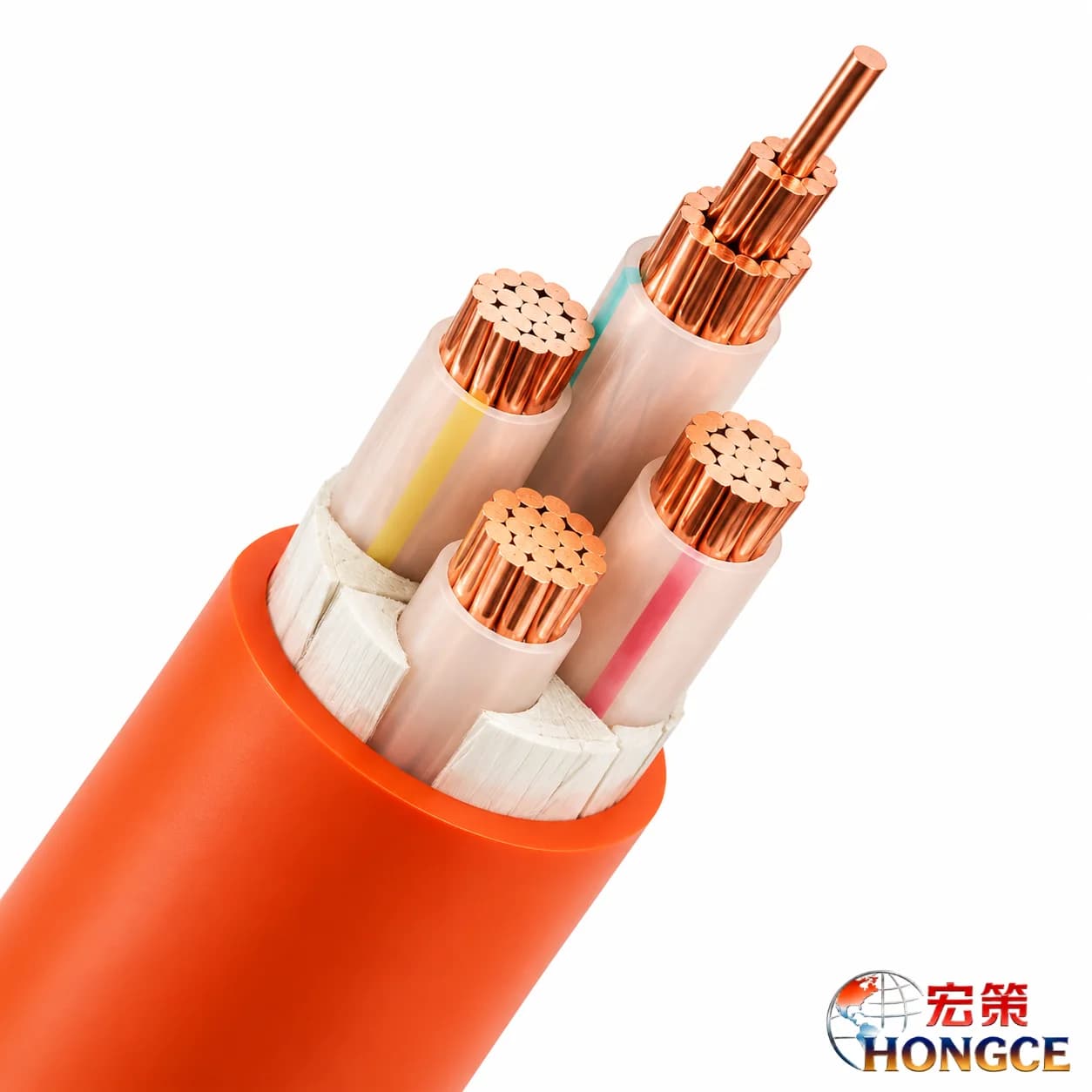
Where the design requires continued operation during fire, select a construction supported by the specified circuit-integrity tests. Hongce WDZN-YJY includes a mica-based fire barrier, but acceptance depends on the relevant report and project requirements.

For example, IEC 60331-1:2018 covers defined fire-with-shock testing for cables within its scope, including an overall diameter above 20 mm. The appropriate part must be selected. Neither LSZH terminology nor a general standards list establishes compliance with every fire scenario.
Project Reference: China Unicom’s Deqing Data Centre
Published Project Background and Solution
Hongce’s published reference identifies the new construction project for IDC room No. 4 at China Unicom’s Deqing data centre in Zhejiang. It describes smoke and corrosive combustion gases as concerns for the computing environment and states that Hongce supplied an LSZH flame-retardant power and control cable portfolio. See the Deqing data centre project page.
What EPC Buyers Can Learn
This reference illustrates the relevance of reviewing electrical function alongside smoke, gas-emission and flame-spread requirements. However, the public page does not identify exact cable models, voltage ratings, quantities, test reports or acceptance results. The WDZ-YJY parameters above should therefore not be presented as the project’s supplied specification.
For a comparable procurement, request a traceable connection between the cable schedule, proposed construction and supporting reports. A domestic supply reference provides useful experience context; approval for another project requires assessment against its own specification and destination-market requirements.
For example, the technical submission can identify each cable tag, its circuit duty, the required fire performance and the report supporting the proposed construction. This is a recommended review method, not a claim about the Deqing project's documented approval process. It helps buyers separate a relevant project reference from evidence for the cable they are currently purchasing.
Check Installation Conditions Before Confirming Cable Size
Thermal Conditions and Electrical Limits
Evaluate ambient temperature, installation method, circuit grouping and ventilation. Buried routes also require relevant soil and burial-depth inputs. A 90°C conductor limit is not permission to apply an ampacity value from a different installation arrangement.
Check voltage drop, fault withstand, protective-device operation and terminal temperature limits. Nonlinear loads can also make harmonic content and neutral-conductor assessment relevant. Hongce’s current-rating and derating guide provides background; the project calculation must state its own assumptions.
Mechanical and Environmental Conditions
Confirm installation and final bending radii, pulling limits, support arrangements and gland compatibility. Identify exposure to moisture, sunlight, chemicals or mechanical damage. Direct-burial or immersion suitability must be declared for the complete cable and installation system, not inferred from “LSZH” or the presence of armour.
EPC Checklist: Review Evidence Before Approval
Build a Requirement-to-Evidence Matrix
Use the matrix below during technical clarification. Record deviations explicitly so that the purchasing team can compare equivalent offers.
Review item | Evidence to request | Approval check |
|---|---|---|
Electrical construction | Datasheet and dimensioned drawing | Voltage, cores, conductor class and materials agree |
Thermal and installation limits | Ampacity assumptions and installation instructions | Conditions match the approved route |
Fire performance | Relevant test reports | Method, category, construction and criteria match |
Manufacturing verification | Agreed routine and sample-test records | Results identify the supplied product or batch |
Certification | Applicable certificates and scope | Product coverage and validity are clear |
Delivery and traceability | Drum schedule, marking and batch references | Lengths and identification match the order |
Distinguish Product Evidence from General Credentials
A type-test report, supplied-length test record and management-system certificate serve different purposes. An ISO certificate does not replace cable-specific performance evidence. Check the report issuer, laboratory scope where relevant, sample identification and applicability to the offered construction.
Before production release, agree any witness inspections and the documents required with each shipment. At receipt, compare drum identification, cable marking and delivered lengths with the approved schedule. Where a document or marking differs, raise a technical clarification before accepting a substitution. This creates a clearer record for procurement, installation and subsequent maintenance.
Compare Product Options and Issue a Complete RFQ
Keep PVC-Sheathed and LSZH Options Distinct
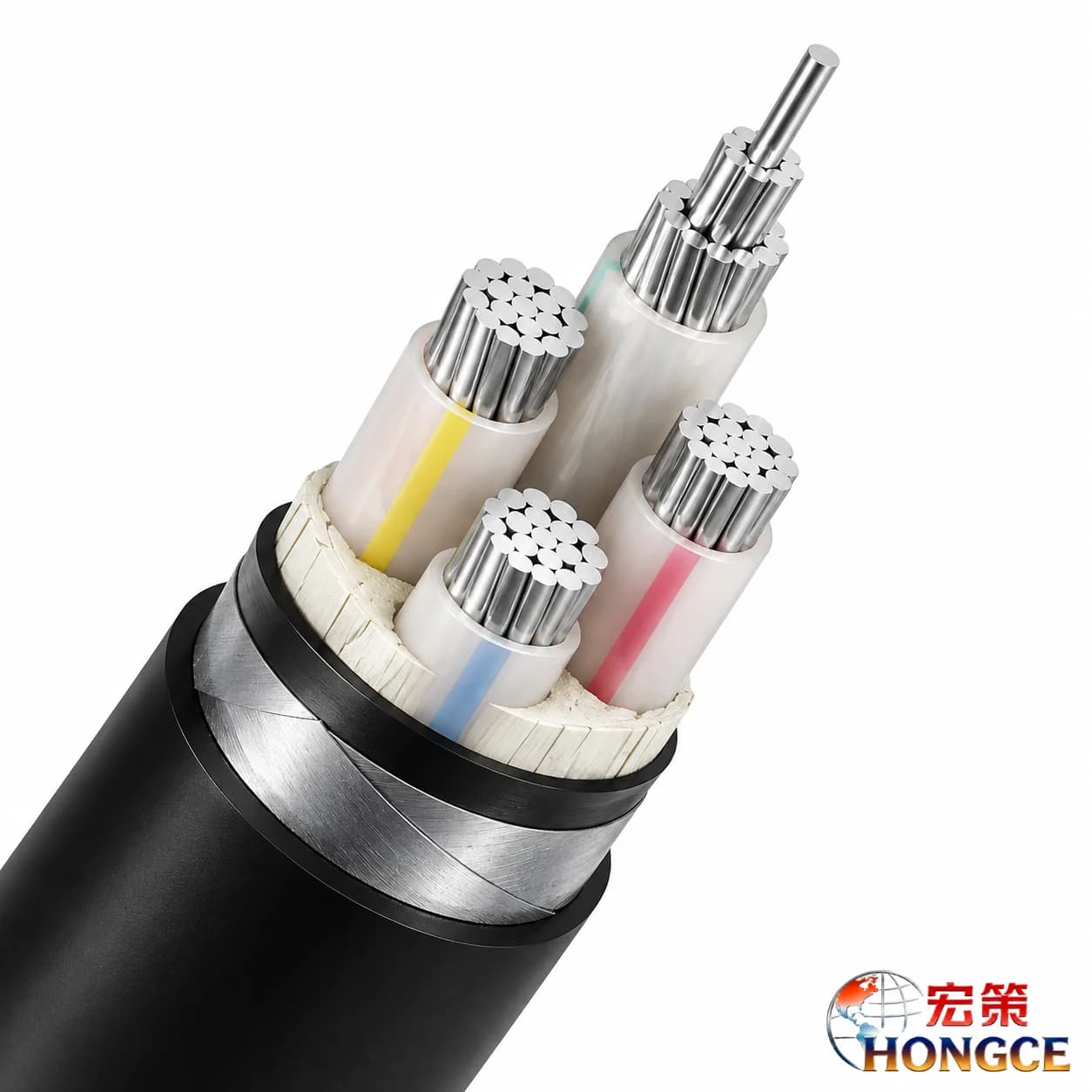
Hongce YJV uses copper conductors, XLPE insulation and a PVC sheath. Hongce YJLV uses aluminium conductors with XLPE insulation and a PVC sheath. These constructions are not LSZH equivalents of WDZ-YJY.


Consider them only where the approved specification permits that construction. Changing copper to aluminium requires electrical sizing, termination and installation review; a lower material price alone does not establish lower installed cost.
RFQ Information That Reduces Clarification Cycles
Include the project location, circuit function, voltage, frequency, earthing arrangement, conductor requirements, core configuration, sheath and mechanical protection. Add route conditions, fire-test requirements, quantities, drum lengths, document submissions and delivery milestones. Ask suppliers to identify exclusions and deviations before commercial comparison.
Separate the technical comparison from the delivery comparison. A compliant construction may still require different drum handling, joint locations or termination accessories. Confirm those interfaces early, particularly when phased deliveries must follow the installation sequence. Evaluate the complete supplied package rather than treating every quotation with the same nominal cross-section as interchangeable.
Discuss Your Data Centre Cable Specification
Send the approved cable schedule and technical requirements to Hongce Cable for product information and quotation review. Compare proposed constructions, supporting documents and declared deviations before placing an order.
About the Author
Junjie Cheng – Senior Cable Engineer at Hongce Cable Junjie Cheng is the Senior Cable Engineer at Zhejiang Hongce Cable Co., Ltd., specializing in power cable design, manufacturing processes, and international quality control. He leads Hongce Cable’s technical team to deliver customized cabling solutions for global infrastructure and power grids. Mr. Cheng specializes in the engineering of medium-to-high voltage cables. He recently spearheaded the successful technical review and production of a RMB 5.5 million (approx. USD 760K) export project to Malaysia, delivering high-performance YJLV 6/10KV 3*150 mm² XLPE insulated aluminum power cables. His deep expertise in triple-layer co-extrusion and drum twister cabling guaranteed the strict mechanical and electrical performance required for Malaysia's power environment. Under his technical guidance, Hongce Cable ensures all products comply with IEC, BS, ASTM, and CE certifications, providing safe, efficient, and certified power transmission solutions to global B2B buyers.