Compliance with BOMBA & PUIL Standards: A Technical Guide to BS 6387 CWZ Fire-Resistant Cables in Malaysia and Indonesia
Keep emergency systems powered and pass local safety inspections the first time with proven WDZN-YJY cable solutions.

Ensure your infrastructure meets strict BOMBA and PUIL life-safety regulations with BS 6387 CWZ certified fire-resistant cables. This comprehensive guide breaks down the critical differences between WDZN-YJY and standard distribution cables, offering expert model selection and installation best practices for tropical climates in Malaysia and Indonesia. Keep emergency systems powered when it matters most.
Across Malaysia and Indonesia, rapid urbanization and major industrial developments—such as the data center expansion in Johor, infrastructure in Greater Jakarta, and renewable energy projects in Batam—have heightened the focus on electrical safety. Regulatory bodies like Jabatan Bomba dan Penyelamat Malaysia (BOMBA), Suruhanjaya Tenaga (ST), and Indonesia's Persyaratan Umum Instalasi Listrik (PUIL / BSN) enforce stringent codes for life-safety wiring in commercial and public infrastructure.
During emergency events, circuit integrity is crucial. Essential circuits—including emergency ventilation, fire pumps, smoke control systems, and evacuation alarms—must remain energized to facilitate safe egress. Meeting these requirements relies on specifying cables engineered and manufactured to rigorous safety standards, capable of withstanding severe thermal, water, and mechanical stress, primarily certified under the BS 6387 CWZ and MS IEC 60331 / SNI IEC 60331 frameworks.

Technical Overview: BS 6387 CWZ vs. Local Regulatory Mandates
Standard flame-retardant cables prevent flame propagation along cable runs, but they do not maintain electrical power during an active fire. Fire-resistant cables, by contrast, preserve electrical continuity under severe direct exposure.
In Malaysia’s Uniform Building By-Laws (UBBL) and Indonesia’s PUIL guidelines, fire safety compliance aligns with international protocols. The BS 6387 testing framework evaluates cables under three distinct hazard categories:
- Category C (Direct Resistance to Fire): Withstands a direct flame at 950°C (±40°C) for 180 minutes under rated operating voltage.
- Category W (Resistance to Fire with Water): Withstands direct flame at 650°C for 15 minutes, followed by an additional 15 minutes of simultaneous flame exposure and water spray (simulating active sprinkler systems).
- Category Z (Resistance to Fire with Mechanical Shock): Withstands direct flame at 950°C for 15 minutes while receiving mechanical impacts every 30 seconds (simulating structural debris collapse).
Full certification to BS 6387 CWZ verifies that power lines remain operational throughout initial fire suppression and evacuation windows, a benchmark enforced across our quality control and testing laboratories
Technical Specifications: Fire-Resistant vs. Standard Distribution Cables
Selecting power cables for high-density public structures, data centers, or underground rail lines requires analyzing conductor materials, fire barriers, and outer sheath characteristics under tropical conditions.
Technical Parameter Comparison Table (0.6/1kV Range)
Technical Parameter | WDZN-YJY 0.6/1kV (Primary Life-Safety) | WDZ-YJY 0.6/1kV (Public Feeder Option) | YJV 0.6/1kV (Standard Power) |
Conductor Material | Class 1 Solid / Class 2 Stranded Plain Copper | Class 1 Solid / Class 2 Stranded Plain Copper | Class 1 Solid / Class 2 Stranded Plain Copper |
Fire Barrier Layer | Dual Synthetic Mica Tape Wrap | None | None |
Insulation Material | XLPE (Cross-linked Polyethylene) | XLPE (Cross-linked Polyethylene) | XLPE (Cross-linked Polyethylene) |
Outer Sheath | Low-Smoke Zero Halogen (LSZH) | Low-Smoke Zero Halogen (LSZH) | PVC (Polyvinyl Chloride) |
Rated Voltage | 0.6/1 kV | 0.6/1 kV | 0.6/1 kV |
Fire Performance Rating | BS 6387 CWZ / MS IEC 60331 / SNI IEC 60331 | IEC 60332-3 Cat. A (Flame Retardant) | IEC 60332-1 (Flame Retardant) |
Max. Operating Temp. | 90°C | 90°C | 90°C |
Short-Circuit Temp. (5s) | 250°C | 250°C | 250°C |
Smoke & Acid Emission | Low Smoke, Zero Acid/Halogen Gas | Low Smoke, Zero Acid/Halogen Gas | Standard PVC Smoke Generation |
Primary Local Target | BOMBA / PUIL Life-Safety Circuits | High-Density Feeder Lines | General Distribution / Ducts |

Model Selection for Malaysian & Indonesian Project Applications
Electrical contractors in Malaysia and Indonesia should match cable specifications directly to project risk classifications:
- BOMBA / PUIL Mandated Life-Safety Circuits:
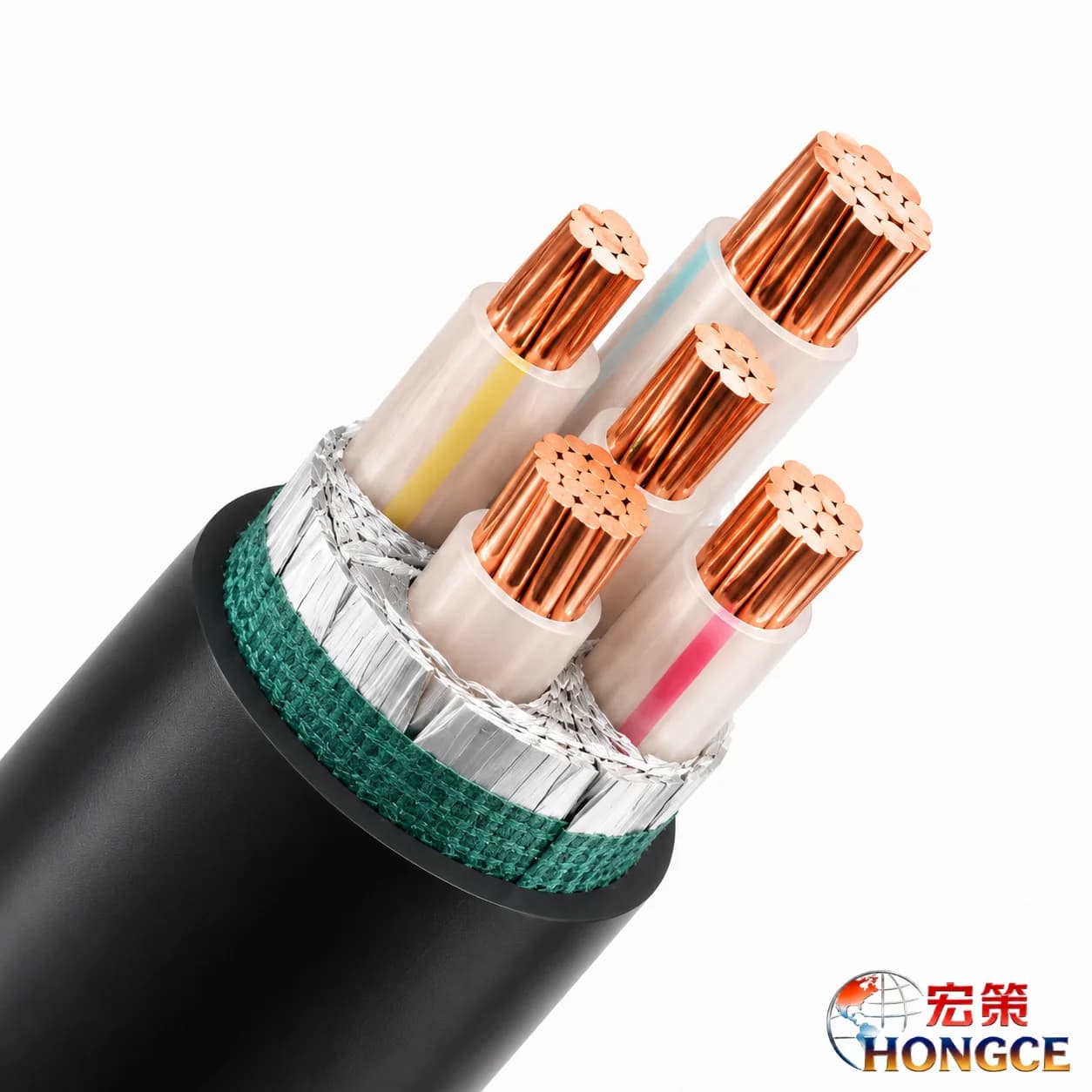
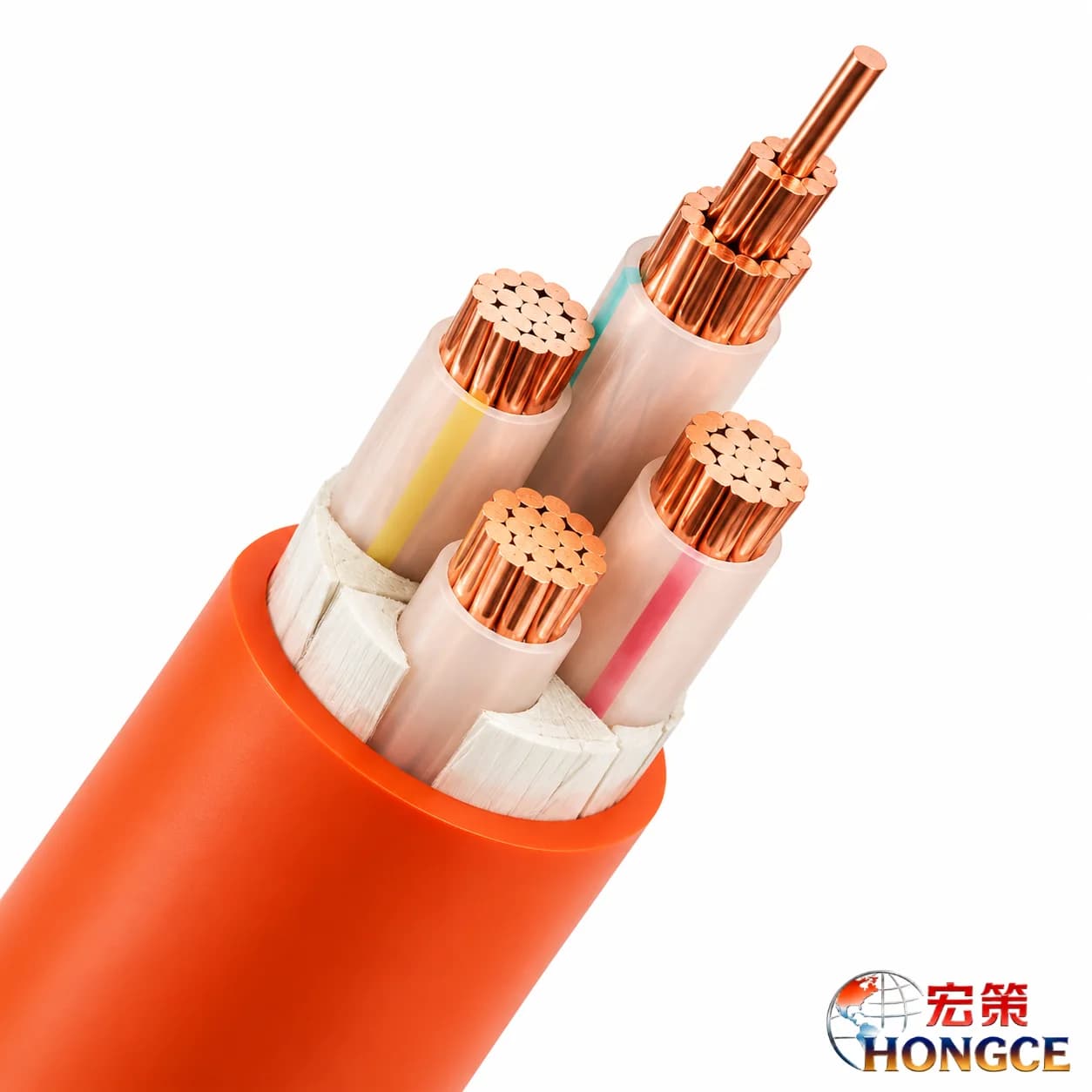
Our flagship WDZN-YJY 0.6/1kV Copper XLPE LSZH Fire-Resistant Power Cable incorporates a double synthetic mica tape layer and cross-linked polyethylene insulation under an LSZH sheath. It is engineered for high fire-safety compliance in emergency power feeders, high-rise risers, and underground utility tunnels. - High-Occupancy Public Buildings & Data Centers:
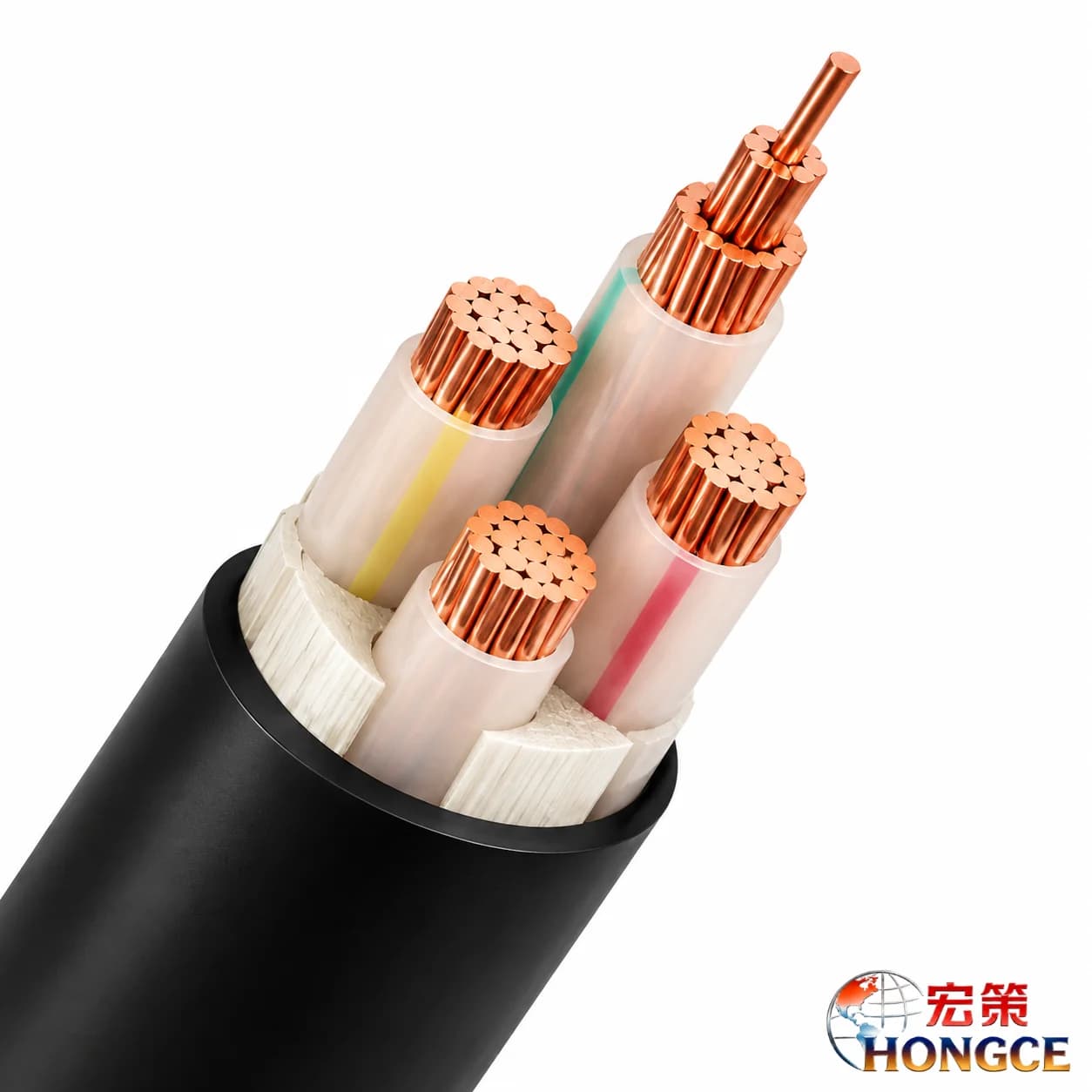
For distribution feeders in commercial malls, airports, and server halls where fire resistance is not mandatory on every line but toxic gas elimination is vital, WDZ-YJY 0.6/1kV Copper XLPE Halogen-Free Low-Smoke Flame-Retardant Power Cable limits smoke obscurity and corrosive acid emission. - General Industrial Distribution:
For standard underground conduits, sub-distribution panels, and factory floor power delivery, YJV 0.6/1kV Copper XLPE-Insulated PVC-Sheathed Power Cable offers durable mechanical protection and stable current-carrying capacities.
Field Application Case Study: Commercial Project in Southeast Asia
The practical value of verified fire resistance and insulation quality is demonstrated in this completed supply contract for a commercial development in the region. Explore more of our industry applications in our Project References.
Project Context & Technical Requirements
- Project Context: A commercial building project in Southeast Asia requiring high-density underground utility cabling.
- The Challenge: The installation involved basement utility ducts with persistent relative humidity levels reaching up to 75%. The site engineering team required cables compliant with the BS 6387 CWZ standard that could also resist humidity-induced insulation aging. Additionally, strict project schedules required full manufacturing, factory testing, and delivery within a 60-day window.
- The Hongce Solution: Hongce Cables supplied 2,000 meters of WDZN-YJY 0.6/1kV Copper XLPE LSZH Fire-Resistant Power Cable. To verify performance prior to shipment, our technical team provided comprehensive third-party industry certifications and test reports confirming that the synthetic mica barrier and XLPE insulation maintained high dielectric strength under elevated ambient moisture conditions.
- Measured Outcomes:The Result: The 2,000 meters of fire-resistant cable arrived on site within the 60-day timeline. The M&E contractor passed the local Fire Safety Bureau’s circuit continuity inspection on the first attempt, saving approximately 20% in potential rework and project delay costs.
Installation Best Practices for Tropical Climates (Malaysia & Indonesia)
Ambient conditions in Malaysia and Indonesia—characterized by high annual rainfall, ambient heat, and relative humidity exceeding 80%—require specific installation safeguards:
Managing Minimum Bending Radii: Fire-resistant cables containing mica tape wrap must maintain a minimum bending radius (typically 12x to 15x overall cable diameter). Excessive bending during pull-in through cable trays can cause micro-fractures in the mica layer.
Moisture Protection at Cable Ends: During monsoon seasons or high-humidity storage in places like Klang, Penang, Jakarta, or Surabaya, cable ends must be sealed with heat-shrinkable end caps immediately after cutting to prevent moisture migration into the copper strands.
Segregation of Essential Lines: In accordance with UBBL, BOMBA, and PUIL guidelines, fire-resistant circuits must be installed on independent cable ladders away from standard PVC power lines to prevent thermal interference during localized faults.
Engineering Consultation & Procurement Support
Meeting local electrical codes in Malaysia and Indonesia requires certified cable design, verified factory test documentation, and insulation capable of enduring tropical operating environments. Specifying cables built to BS 6387 CWZ ensures that life-safety circuits remain reliable when emergency systems are triggered.
For technical datasheets, certified test reports, or factory-direct quotations for your upcoming projects across Malaysia and Indonesia, reach out to our engineering experts via our Contact & Support Page.
About the Author
Junjie Cheng – Senior Cable Engineer at Hongce Cable Junjie Cheng is the Senior Cable Engineer at Zhejiang Hongce Cable Co., Ltd., specializing in power cable design, manufacturing processes, and international quality control. He leads Hongce Cable’s technical team to deliver customized cabling solutions for global infrastructure and power grids. Mr. Cheng specializes in the engineering of medium-to-high voltage cables. He recently spearheaded the successful technical review and production of a RMB 5.5 million (approx. USD 760K) export project to Malaysia, delivering high-performance YJLV 6/10KV 3*150 mm² XLPE insulated aluminum power cables. His deep expertise in triple-layer co-extrusion and drum twister cabling guaranteed the strict mechanical and electrical performance required for Malaysia's power environment. Under his technical guidance, Hongce Cable ensures all products comply with IEC, BS, ASTM, and CE certifications, providing safe, efficient, and certified power transmission solutions to global B2B buyers.