How to Choose the Right Control Cable for Industrial Automation Systems
Master Core Selection, Beat EMI, and Eliminate Costly Equipment Downtime with Expert Engineering Strategies

Discover expert tips on choosing the right control cable for industrial systems! Learn how to prevent costly signal loss, beat EMI, and ensure compliance. Click to read the full guide.
How to Choose the Right Control Cable for Industrial Automation Systems
The core of any modern industrial automation system—whether it involves robotic arms on an automotive assembly line or computer numerical control (CNC) machining centers—relies on the precise and continuous transmission of signals. In these complex networks, the control cable acts as the central nervous system.
Selecting the incorrect cable specification can lead to reduced signal attenuation, unexpected equipment downtime, and costly maintenance overhauls. For engineers and procurement managers, choosing the right control cable requires a systematic evaluation of environmental conditions, electromagnetic compatibility, mechanical stress, and international safety standards.
This comprehensive guide explores the critical engineering factors you must consider when selecting control cables for industrial automation projects, ensuring reliable performance and extended operational life.

Assess the Operating Environment
The first step in cable selection is evaluating the physical environment where the cable will be installed. Environmental factors directly dictate the choice of insulation and jacketing materials, which are critical for preventing premature material degradation.
Temperature Extremes: PVC vs. XLPE vs. PUR
Industrial facilities often feature ambient temperature fluctuations. Standard indoor environments typically utilize PVC (Polyvinyl Chloride) insulation, which offers a cost-effective solution for temperature ranges between -15°C and +70°C.
However, for environments near furnaces, industrial boilers, or outdoor installations exposed to direct sunlight, engineers often upgrade to XLPE (Cross-linked Polyethylene). XLPE provides superior thermal stability, handling continuous operating temperatures up to 90°C and offering improved resistance to thermal aging. For extreme mechanical environments involving sub-zero temperatures (down to -40°C), PUR (Polyurethane) jackets are often specified due to their ability to remain flexible without cracking.
Exposure to Oils, Chemicals, and Moisture
In manufacturing sectors such as metalworking, food processing, or petrochemicals, cables are routinely exposed to cutting fluids, lubricating oils, and harsh cleaning agents. Standard PVC can absorb these fluids over time, leading to swelling and eventual dielectric failure.
For these applications, specifying a control cable with an oil-resistant or chemical-resistant outer sheath is essential. Cables designed with specialized PUR or TPE (Thermoplastic Elastomer) jackets offer robust chemical resistance, ensuring the internal conductors remain protected from corrosive elements.
Material Type | Operating Temp Range | Oil Resistance | Flexibility | Typical Application |
PVC | -15°C to +70°C | Low to Moderate | Moderate | Standard indoor plant wiring, static control panels |
XLPE | -20°C to +90°C | Moderate | Low (Rigid) | High-temperature zones, prolonged operational life |
PUR | -40°C to +80°C | Excellent | High | CNC machining, robotics, oily environments |
Deal with Electromagnetic Interference (EMI)
Modern factory floors are densely packed with Variable Frequency Drives (VFDs), heavy-duty motors, and high-voltage power networks. These devices emit significant electromagnetic interference (EMI) and radio frequency interference (RFI). When control cables are routed near these noise sources, induced currents can distort low-voltage control signals.
Shielded vs. Unshielded Control Cables
Unshielded control cables are appropriate for isolated environments with minimal electrical noise, or for basic relay control circuits where minor voltage spikes do not affect equipment operation. They are easier to terminate and generally more cost-effective.
However, in automated environments relying on precise analog signals (e.g., 4-20mA sensors) or digital data communication, shielded control cables are mandatory. A proper shield minimizes interference, reducing signal attenuation and preventing erratic machinery behavior.

Foil Shielding vs. Copper Braid
Understanding the type of shielding is just as important as knowing whether to use a shield at all:
- Aluminum Foil Shielding: Provides 100% surface coverage and is highly effective at deflecting high-frequency EMI. However, foil is relatively fragile and not suitable for continuous flexing applications.
- Tinned Copper Braid Shielding: Offers 70% to 95% physical coverage. It is highly effective against low-frequency interference and provides excellent mechanical strength, making it ideal for moving machinery.
- Combination Shielding (Foil + Braid): For environments requiring the highest level of electromagnetic compatibility, cables featuring both foil and braided shields offer comprehensive protection across the entire frequency spectrum.
For more authoritative guidelines on managing EMI in industrial environments, engineers often refer to the standards published by the IEEE Electromagnetic Compatibility Society.
Evaluate Mechanical Stress and Flexibility
Automation implies movement. How a cable is routed and how often it moves will determine its mechanical specifications. Selecting a static cable for a dynamic application is a common engineering error that leads to conductor fatigue and core breakage.
Static Routing vs. Dynamic Applications
If the control cable is routed through fixed conduits or cable trays from a control room to a stationary machine, standard solid or stranded conductors (Class 1 or Class 2) are sufficient.
Conversely, automated systems like gantry robots, automated guided vehicles (AGVs), and continuous packaging machines require highly flexible control cables (Class 5 or Class 6 fine-stranded copper conductors). These are specifically engineered to withstand millions of bending cycles without structural failure.
The Importance of Bending Radius
Every cable has a Minimum Bending Radius (MBR)—the tightest allowable curve a cable can safely endure without damaging its insulation or internal shielding.
- For static installations, a bending radius of 4x to 6x the cable's outer diameter (OD) is typical.
- For dynamic applications (such as drag chains), the MBR often needs to be 7.5x to 10x the OD.
Exceeding the bending radius stresses the outer jacket and can cause the internal copper strands to snap, leading to intermittent signal loss and eventual system failure.

Check Voltage Ratings and Core Configurations
Control cables must be sized correctly not only for the signals they carry but also for the electrical environment they share with power distribution systems.
Determining the Right Number of Cores
Industrial control cables are available in multicore configurations, ranging from 2 cores up to 61 cores or more. When specifying core counts, it is a standard engineering practice to include 10% to 20% spare cores. This foresight allows for future system upgrades or the bypassing of a damaged core without the need to pull entirely new cables through the facility.
Standard Voltage Ratings for Automation
Most industrial control signals operate at low voltages (e.g., 24V DC, 110V AC). However, control cables are typically rated for higher voltages—commonly 300/500V or 450/750V—to ensure insulation integrity and dielectric strength.
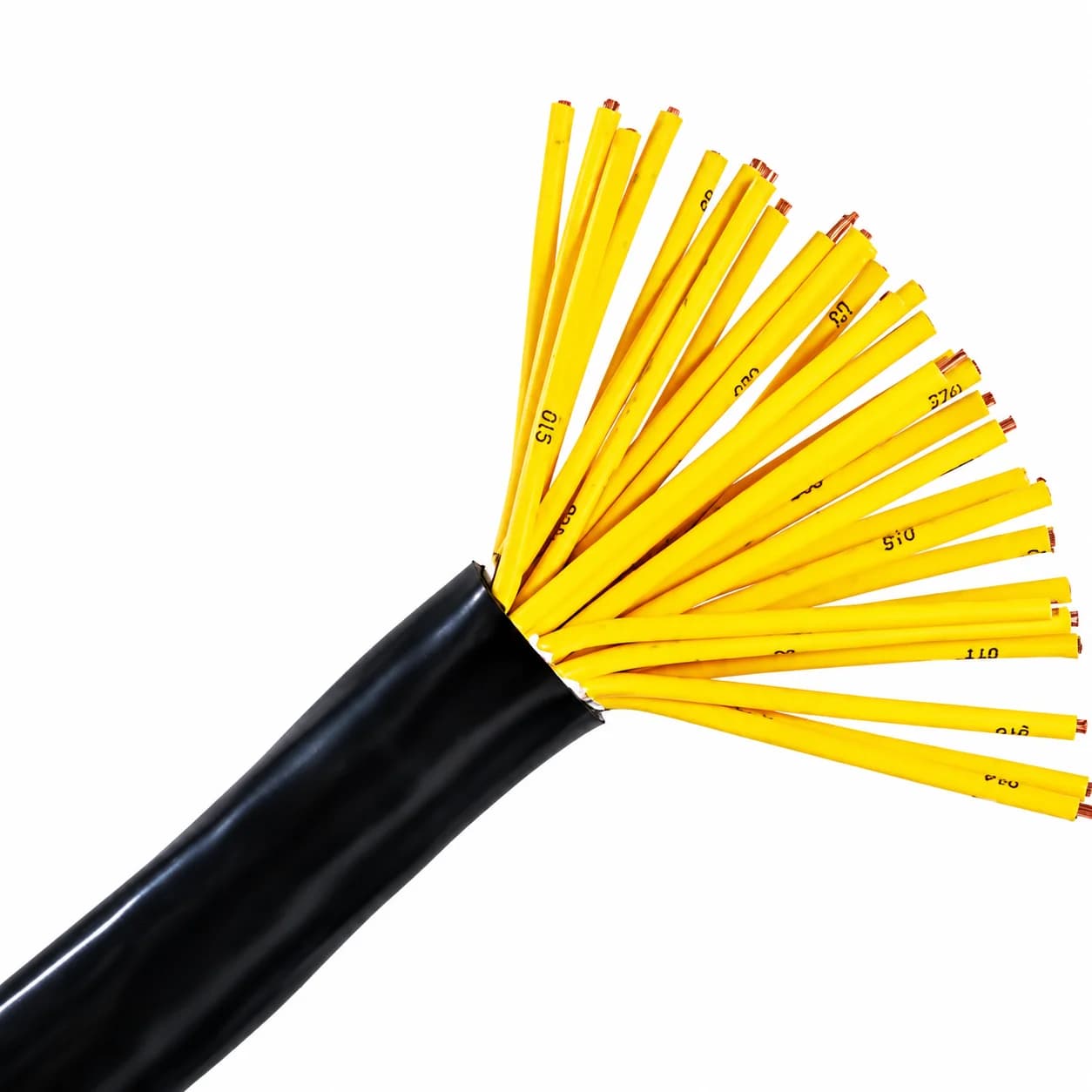
For instance, the KVV 450/750V Control Cable is a standard specification in many industrial panels, providing reliable performance for wiring control, signal, and protection circuits under AC rated voltages up to 450/750 Volts.
Specification | Core Range | Conductor Type | Voltage Rating | Shielding Options |
KVV | 2 to 61 Cores | Solid / Stranded Copper | 450/750V | Unshielded |
KVVP | 2 to 61 Cores | Stranded Copper | 450/750V | Copper Wire Braid |
KVVP2 | 2 to 61 Cores | Stranded Copper | 450/750V | Copper Tape Shield |
Build a Complete Wiring Ecosystem: Power and Control in Synergy
In any industrial facility, control cables do not operate in isolation. They are part of a broader infrastructure that includes heavy-duty power distribution. While control cables like the KVV series handle the low-current "brain" functions, power cables act as the "muscle."
To maintain safety and operational stability, it is crucial to select appropriate power cables that complement your control systems. Mixing low-quality power cables with high-end control cables can lead to thermal hazards and system imbalances.
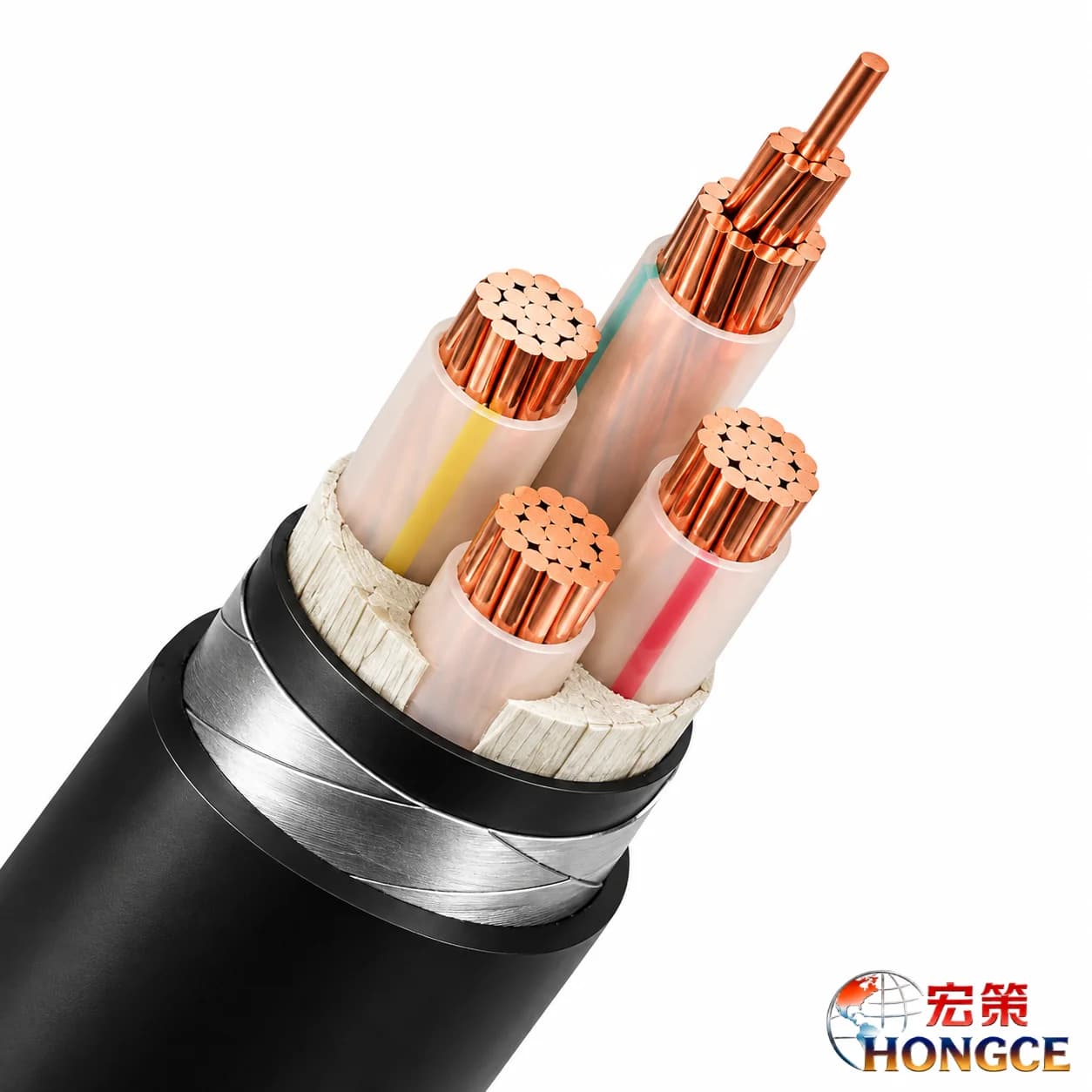
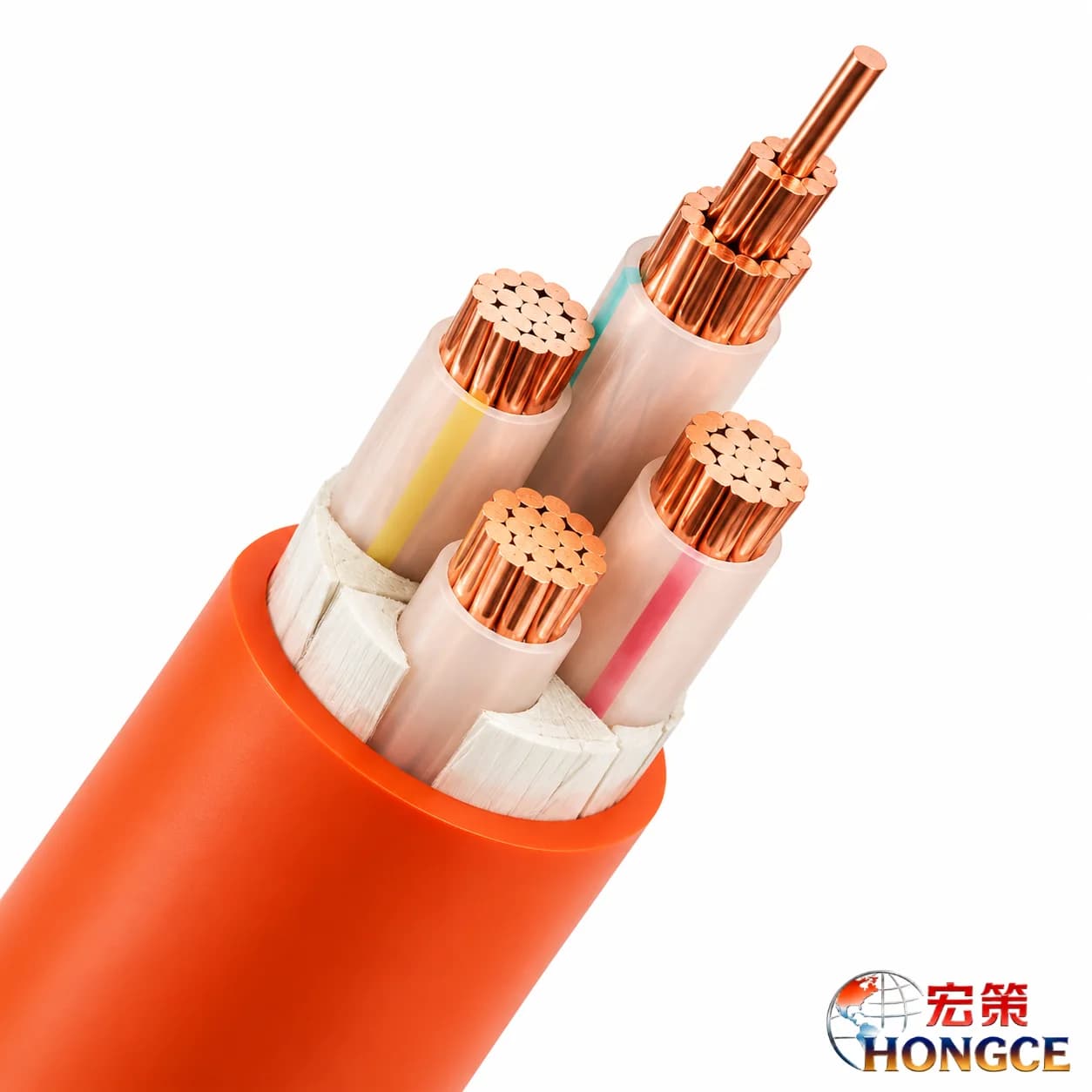
For the main low-voltage power distribution network across the factory floor, engineers frequently specify the YJV22 0.6/1kV Cable, which features XLPE insulation and steel tape armoring for exceptional mechanical protection in direct-burial or harsh tray routing. In environments where fire safety is a critical compliance factor—such as enclosed automation hubs or underground facilities—the WDZ-YJY 0.6/1kV Cable(Low Smoke Zero Halogen) is deployed to ensure strict fire-safety compliance and protect sensitive electronic equipment from corrosive smoke in the event of a fire.
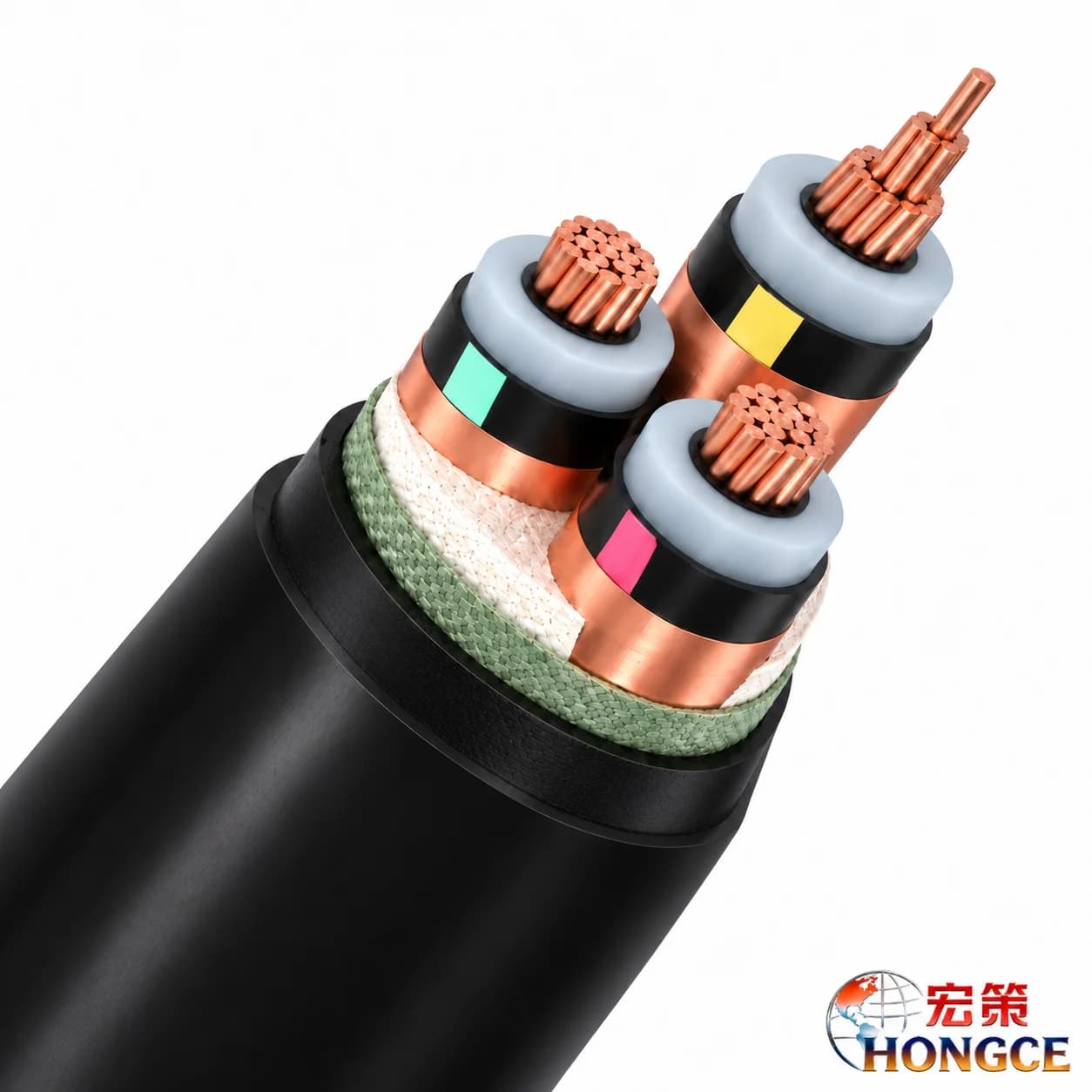
Furthermore, for feeding power from the municipal grid or main substations to the factory's localized transformers, medium-voltage solutions like the YJV 8.7/15kV Cable provide the necessary backbone, improving energy efficiency over long-distance power transmission.
Ensure Compliance with International Standards
Procuring cables that adhere to recognized international standards is non-negotiable for large-scale engineering projects and cross-border trade. Compliance guarantees that the cable has undergone rigorous testing for flame retardancy, conductor resistance, and insulation thickness.
When selecting control cables, verify that the manufacturer complies with standards set by the International Electrotechnical Commission (IEC), specifically IEC 60227 (for PVC cables) and IEC 60502 (for extruded solid dielectric cables).
Why Source Your Control Cables from Hongce Cables?
Selecting the right cable specification on paper is only half the process; partnering with a reliable manufacturer ensures those specifications translate into real-world performance.
At Hongce Cables, we specialize in engineering industrial wiring solutions that meet stringent international standards. Our manufacturing facilities are optimized to produce a comprehensive range of control and power cables, from highly flexible PUR drag-chain cables to heavily shielded KVVP signal cables.
We understand that every automation project has unique environmental and mechanical challenges. Our technical team works directly with engineers and procurement officers to provide customized cable designs, ensuring precise core configurations, specialized jacketing, and optimal shielding for your specific application.
Conclusion
Choosing the right control cable for industrial automation systems requires careful consideration of the operating environment, EMI risks, mechanical demands, and voltage ratings. By systematically evaluating these factors—and ensuring the control cables work in harmony with robust power cables like the YJV and WDZ series—engineers can build a resilient infrastructure that minimizes downtime and supports long-term operational efficiency.
Are you upgrading your automation facility or planning a new industrial project? Contact Hongce Cables today for expert technical support and a competitive quote on premium control and power cable solutions tailored to your engineering requirements.
About the Author
Junjie Cheng – Senior Cable Engineer at Hongce Cable Junjie Cheng is the Senior Cable Engineer at Zhejiang Hongce Cable Co., Ltd., specializing in power cable design, manufacturing processes, and international quality control. He leads Hongce Cable’s technical team to deliver customized cabling solutions for global infrastructure and power grids. Mr. Cheng specializes in the engineering of medium-to-high voltage cables. He recently spearheaded the successful technical review and production of a RMB 5.5 million (approx. USD 760K) export project to Malaysia, delivering high-performance YJLV 6/10KV 3*150 mm² XLPE insulated aluminum power cables. His deep expertise in triple-layer co-extrusion and drum twister cabling guaranteed the strict mechanical and electrical performance required for Malaysia's power environment. Under his technical guidance, Hongce Cable ensures all products comply with IEC, BS, ASTM, and CE certifications, providing safe, efficient, and certified power transmission solutions to global B2B buyers.