
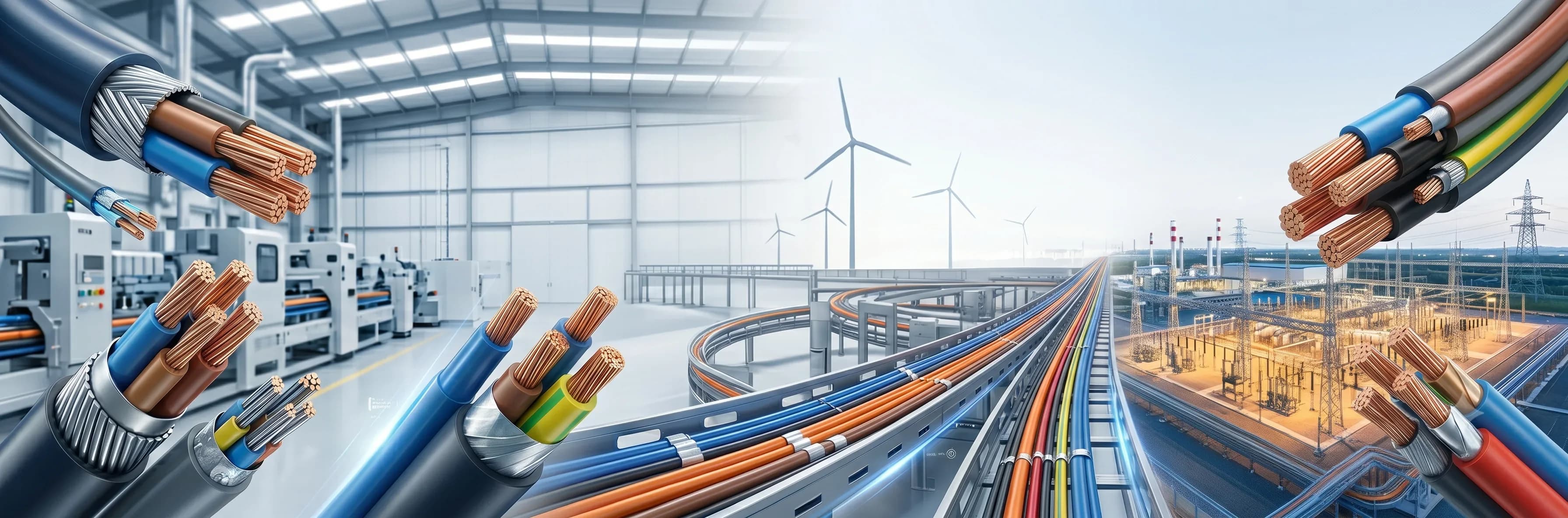
Indonesia 20kV: Why It's Not 11kV — Cable Procurement Notes
PLN-spec medium-voltage cables, SPLN-D3.025 compliance, and the buyer-type dynamics shaping Indonesian project supply.

Indonesia's primary distribution operates at 20 kV — not the 11 kV class of British-influenced Malaysian or the IEC-default 10 kV of much of Vietnam and Thailand. The 20 kV convention reshapes everything from cable spec to PLN qualification, port logistics, and TKDN compliance. Notes from supplying Indonesian projects for Chinese, Korean, and European cable manufacturers.
## Indonesia's 20 kV Distribution Doesn't Look Like the Rest of ASEAN
Indonesia's primary medium-voltage distribution network operates at 20 kV — not the 11 kV class that defines British-influenced markets like Malaysia and Singapore, and not the IEC-default 10 kV class most of Vietnam and Thailand use. The 20 kV convention is a legacy of Dutch colonial-era electrification standardization, and PLN (Perusahaan Listrik Negara, the state-owned electricity utility) has retained it across nearly every distribution feeder rebuilt under the country's five-year electricity master plans.
For cable suppliers serving Indonesian projects, this single fact reshapes the supply conversation. A cable family certified for 6/10 kV operation under IEC 60502-2 doesn't automatically qualify for 12/20 kV PLN service — the insulation thickness, screen design, and routine test requirements step up. SPLN-D3.025 (the Indonesian utility-specific extension of IEC 60502-2 for cables in the 6 to 30 kV range) is the document that actually governs PLN procurement, and it adds Indonesia-specific testing requirements on top of the IEC baseline.
Outside PLN territory — industrial estates, private utilities, and behind-the-meter installations — the procurement rules relax significantly. Most major Indonesian industrial estate operators (Jababeka, MM2100, Karawang International Industrial City, Batam Industrial Development Authority) build internal MV distribution networks where the lead electrical consultant has full standard-selection authority. This is where Chinese-standard cable lands in Indonesia at scale.
## Three Buyer Types We See in Indonesian Project Mix
**PLN direct procurement** — large-volume distribution cable, transmission-tier accessories, and grid-strengthening projects under the RUPTL (Rencana Usaha Penyediaan Tenaga Listrik) five-year plan. Procurement runs through PLN's Daftar Penyedia Terdaftar (DPT) approved supplier list, which requires factory audit, sample testing through PLN-recognized labs, and TKDN (Tingkat Komponen Dalam Negeri) local content evaluation. Multi-year qualification process. Chinese manufacturers participate through joint venture or local representative structures more often than direct supply.
**State enterprise and infrastructure project EPCs** — high-speed rail signaling (the Jakarta-Bandung KCJB line set this precedent), MRT Jakarta extensions, the IKN Nusantara new capital city electrical works, port modernization at Tanjung Priok and Patimban. Project specifications typically cite IEC 60502-2 with SNI (Standar Nasional Indonesia) overlay. Chinese suppliers with IEC equivalence documentation through SGS or TÜV verification routinely supply these projects.
**Industrial estate and data center operators** — Jakarta-area data center buildout (Jakarta is now Southeast Asia's second-largest data center market after Singapore), industrial estate expansion, palm oil milling, mining concession electrification in Kalimantan and Sulawesi. These buyers prioritize delivery schedule, total cost, and supplier responsiveness over a particular standards lineage. They evaluate IEC 60502-2, GB/T 12706.2, and Korean KS C IEC submissions side by side.
## What We Supply to Indonesian Projects
Hongce's Indonesian project mix has clustered around four product families that match the country's specific distribution requirements:
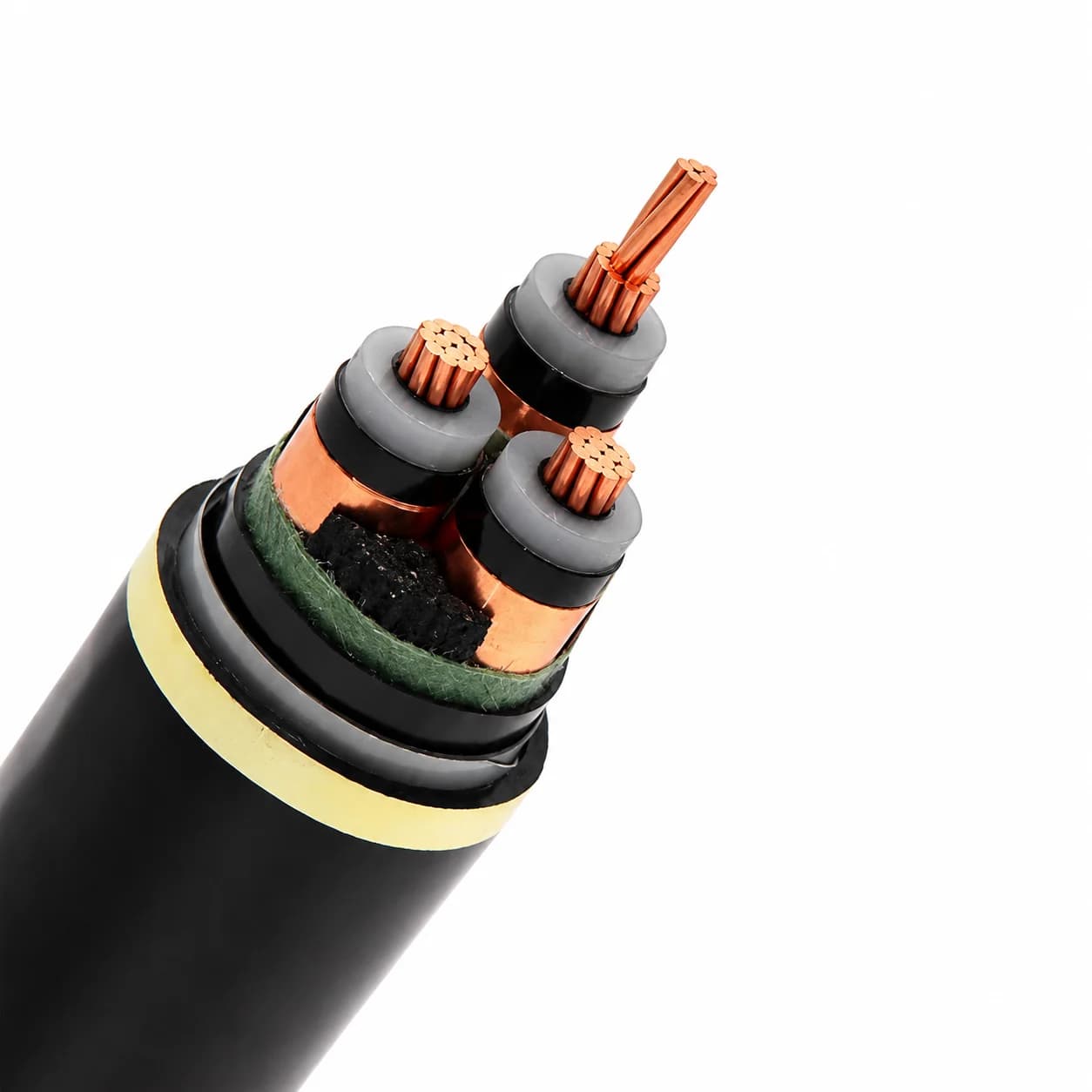
**12/20 kV three-core copper XLPE armored cable** for PLN-territory distribution feeders and industrial estate primary distribution. The 12/20 kV voltage class is uniquely common in Indonesia and parts of southern Sumatra; we maintain production-ready specifications for both copper and aluminum conductor variants in 50 mm² to 240 mm² cross-sections.
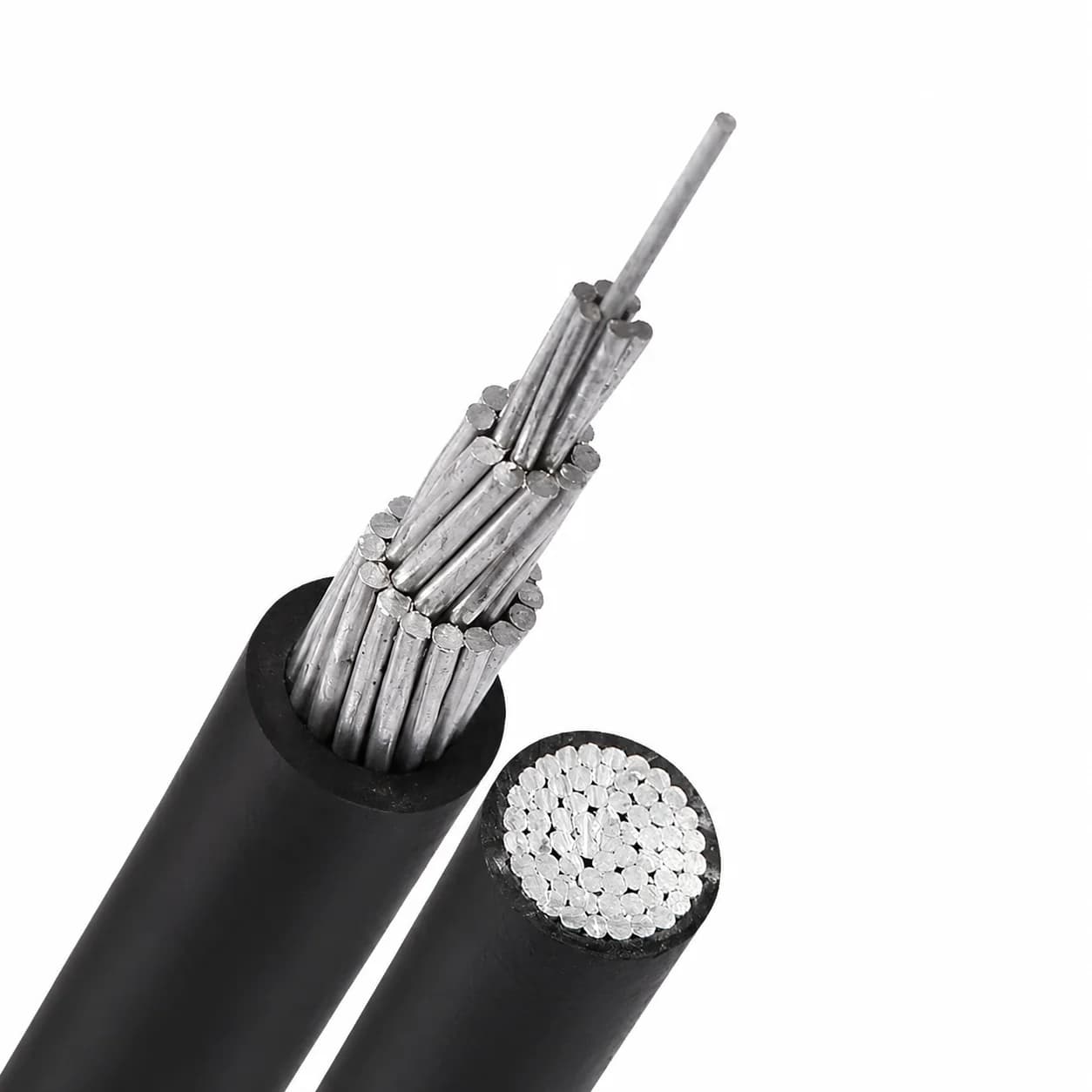
**JKLYJ insulated overhead cable for rural distribution** in palm plantation, secondary forest, and outer-island electrification. Indonesia's geography — thousands of inhabited islands — makes overhead distribution the only economic option across vast service territories. The JKLYJ insulated jacket eliminates vegetation contact and animal-strike faults that dominate bare-conductor outage statistics in tropical Indonesian feeders.
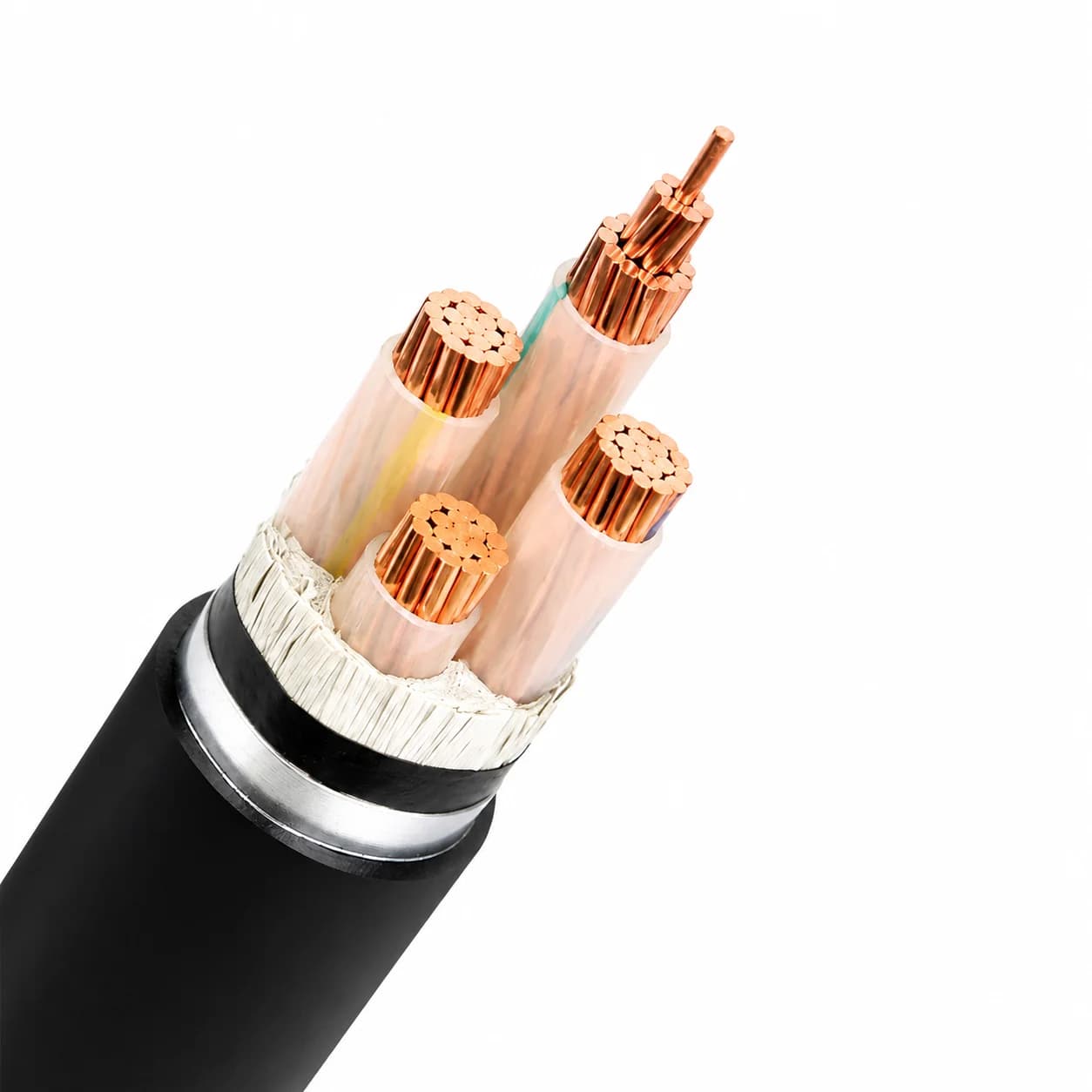
**0.6/1 kV armored aluminum cable** for industrial estate sub-distribution, where aluminum conductor delivers 25-40% cost savings versus copper at acceptable conductivity for typical feeder lengths. Indonesian buyers in cost-sensitive industrial segments (textile, palm processing, basic chemicals) routinely specify aluminum where European or Korean tenders would default to copper.
**Fire-resistant and low-smoke cables** for Jakarta high-rise, hospital, and data center life-safety circuits. Indonesian fire codes for occupied commercial buildings have tightened post-2022, and major Jakarta data center operators specify WDZN-class fire-resistant cable on critical circuits regardless of code minimum.
## Logistics: Shipping, Lead Times, and Packing for Indonesia
Cable shipments to Indonesia route through Tanjung Priok (Jakarta) as the primary container port, with secondary entry through Tanjung Perak (Surabaya) for East Java and Bali-adjacent projects, and Belawan (Medan) for Sumatra projects. Standard transit from Shanghai or Ningbo runs 7 to 14 days depending on shipping line and direct routing availability.
Drum packing follows the buyer's local handling capacity. For PLN-aligned projects, we typically pack 502 m or 1000 m per drum on full wooden construction. For smaller industrial estate orders, 250 m or 300 m drums improve handling on sites with limited crane access. All drums ship with protective wrap (PVC film and plastic strapping) and steel-rim reinforcement for container handling.
Payment structure varies sharply by buyer type. PLN and state enterprise orders follow Indonesian government procurement payment terms (typically 30 days after delivery acceptance, with bid guarantees). Private industrial estate and data center buyers prefer 30 percent advance with 70 percent against shipping documents under irrevocable letter of credit — the standard Indonesian commercial B2B structure.
## Typical Indonesian Engagement Patterns
The first is industrial estate primary distribution — a 12/20 kV three-core copper armored cable supply for site MV networks, typically 5 to 25 km per project, ranging from West Java industrial corridors to Batam free-trade zone expansions. Documentation runs IEC 60502-2 with third-party SGS or TÜV witness verification. The lead consulting engineer audits this directly, and tender qualification turns on production capacity and delivery schedule alignment more than standards mismatch.
The second is rural distribution feeder construction in palm plantation or secondary forest territory — JKLYJ insulated overhead cable in 35 to 240 mm² aluminum cross-sections, replacing bare ACSR conductor that suffered repeated vegetation contact and animal strike outages. Common project scale runs 10 to 50 km of feeder construction. The investment case is the 10-year total cost of ownership advantage over bare conductor — typically 15 to 25 percent lower once vegetation clearance, tropical storm restoration, and animal-strike fault repair are factored in.
The third pattern is Jakarta-area data center and high-rise commercial supply — 0.6/1 kV armored copper cable for MV-to-LV substation interconnections, fire-resistant WDZN-class cable for life-safety circuits, and LSZH compounds for occupied-space risers. Indonesian fire codes for occupied commercial buildings have tightened post-2022, and major Jakarta data center operators specify WDZN cable on critical circuits regardless of code minimum. Delivery schedule is the binding constraint; commissioning windows on hyperscale data center expansions don't accept supplier slippage.
## What Indonesian Project Buyers Actually Ask
**Can your cable be used for PLN projects?** Direct supply to PLN distribution requires our local representative to be registered on the DPT supplier list. We supply PLN-territory infrastructure projects routinely through Indonesian EPC partners whose own DPT registration covers the procurement chain. For projects outside PLN procurement (private industrial, behind-the-meter, data center, mining), we supply directly with IEC equivalence documentation.
**What about TKDN local content compliance?** TKDN requirements apply principally to government-procured projects above specific value thresholds. For private and behind-the-meter installations, TKDN does not gate the procurement. For projects where TKDN does apply, we partner with Indonesian manufacturers for accessory fabrication and termination services that count toward the local content calculation.
**How do you handle the 20 kV voltage class specifically?** The 12/20 kV class is a Hongce production-standard offering. We don't substitute IEC 6/10 kV cables into 20 kV applications — the insulation thickness and routine test requirements at 12/20 kV are materially different, and the substitution would fail a competent engineering review at delivery.
**What's your typical lead time for Indonesian orders?** Stock items in standard cross-sections (12/20 kV three-core, 0.6/1 kV armored aluminum, JKLYJ) ship within 15-20 days of order confirmation, including customs preparation. Production-to-order specifications (custom cross-section, special compound, armor variant) run 40-60 days depending on raw material availability. We confirm specific timeline at quotation.
## Contact Our Indonesia Team
For Indonesian project schedule review, supplier qualification documentation, or to discuss specific compliance pathways for PLN-territory versus private project supply, contact our engineering team. We respond to inquiries within one business day in Asia time zones.
About the Author
Liangce Chi currently serves as Southeast Asia Market Analyst at Zhejiang Hongce Cable Co., Ltd. His work involves in-depth research covering power infrastructure construction across Southeast Asia, price trends of bulk commodities, and cross-border cable trade compliance. Combining insights from macroeconomic data with extensive hands-on cross-border trade experience, Liangce Chi goes beyond theoretical research and conducts on-site assessments of industrial manufacturing investment climates in Thailand, Vietnam, Indonesia and other Southeast Asian markets. Drawing on his professional work, he secured bulk orders from well-established Thai enterprises for Zhejiang Hongce Cable. This landmark achievement has laid a solid quantitative foundation for the company to further expand its market share of industrial building support cables in Thailand and the broader Southeast Asian region.

Frequently Asked Questions
Can your cable be used for PLN projects?+
What about TKDN local content compliance?+
How do you handle the 20 kV voltage class specifically?+
Keep Reading
2026 Grid Hardening: YJV22, WDZN-YJY & JKLYJ Cable Standards
YJV22 armored, WDZN-YJY fire-resistant, and JKLYJ overhead — three cable families that solve three different physical problems in Southeast Asia's 2026 grid hardening cycle. Specifying the wrong family doesn't show up as a budget overrun; it shows up as rework 2 years later. Selection logic, IEC standards, and procurement notes for B2B buyers and design engineers.
BS, IEC, GB: How Buyer Type Decides MV Cable Standards in SEA
Most discussions of medium-voltage cable standards in Southeast Asia treat BS 7870, IEC 60502-2, and GB/T 12706.2 as a technical choice. They're not. They're a sourcing choice — and the sourcing decision happens upstream, at the buyer type. Walking through a real 6.35/11kV YJLY project supplied to a Malaysian private developer shows where Chinese manufacturers actually fit in the ASEAN MV procurement landscape.