CAT6 UTP Sourcing: How to Spot Copper-Clad Aluminum Substitution
Six verification checks SEA procurement teams use to catch CCA substitution in Chinese CAT6 cable supply — before it surfaces as PoE failure or gigabit dropouts.
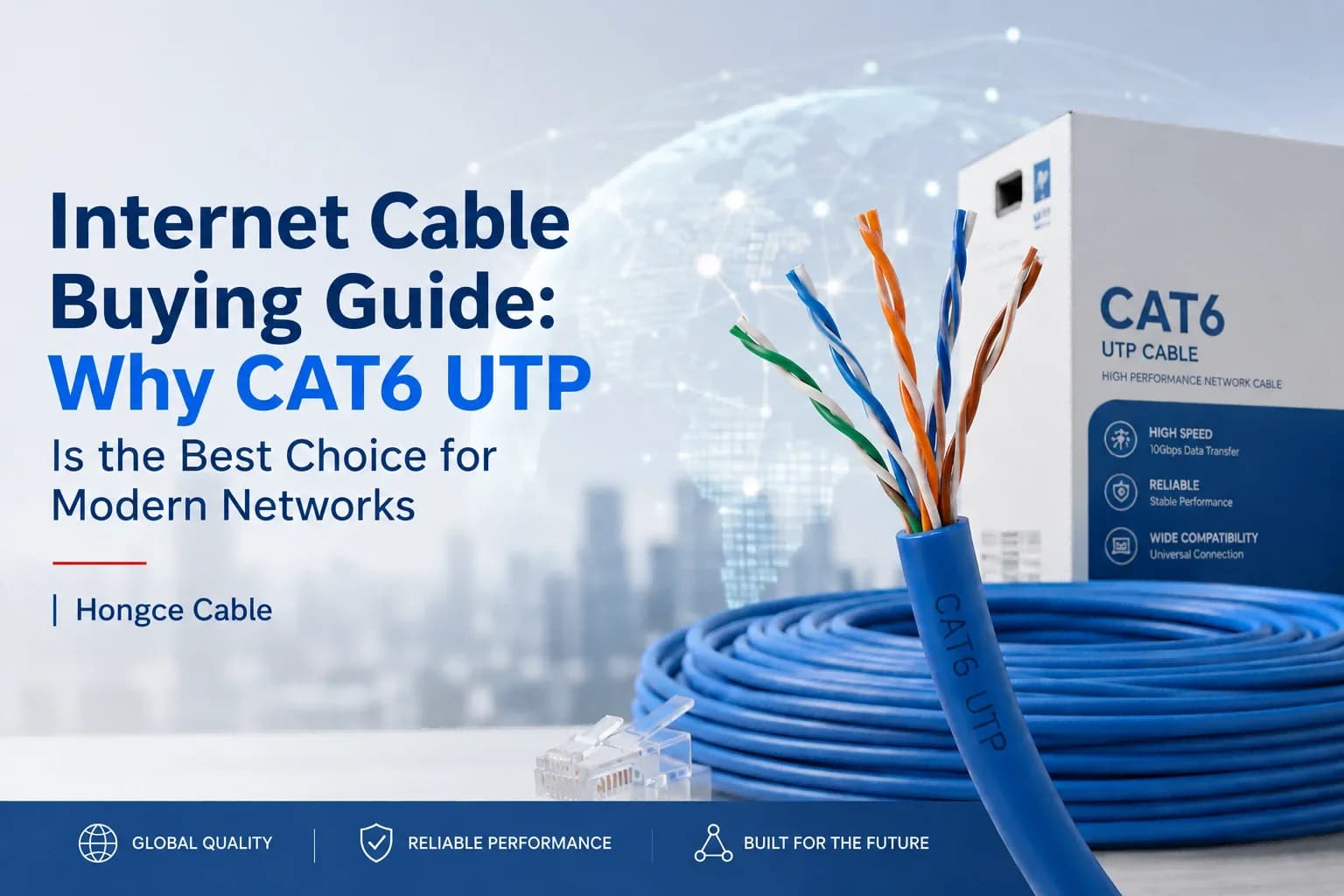
CCA (copper-clad aluminum) substitution is the most common quality compromise in Chinese-sourced CAT6 UTP supply. The conductor looks identical, the certificate PDF looks identical — but DC resistance, weight, and 100m Ethernet stability are all materially different. Six verification checks that SEA procurement teams use to catch CCA substitution before it surfaces in service.
Why "CCA Looks the Same as Copper" Is the CAT6 Sourcing Trap
Procurement teams sourcing CAT6 UTP cable from Chinese manufacturers consistently underestimate one risk: copper-clad aluminum (CCA) substitution. The conductor is a thin copper sheath over an aluminum core, visually indistinguishable from solid copper when viewed in cross-section. Certificate PDFs look identical. Brochure spec sheets cite the same conductor gauge. The cable jacket says "CAT6 UTP" in identical print.
The differences only surface in service: PoE budget failures on long runs, intermittent gigabit dropouts past 80 meters, and DC resistance values that drift outside the TIA-568 acceptance band. By the time a network installer flags the symptoms, the cable has already been pulled through walls and conduit — replacement cost runs 8 to 12 times the original cable purchase price.
CCA isn't inherently fraudulent. It's a recognized alternative conductor in some low-cost networking applications and is openly sold as "CCA cable" by manufacturers who disclose the construction. The fraud happens when CCA gets sold as pure copper — what's known in the industry as "BC marking on CCA construction" (BC = bare copper).
Across CAT6 UTP procurement we observe in Southeast Asian projects, the suppliers who consistently deliver real pure-copper construction tolerate documentation requests. The suppliers who substitute CCA find reasons to defer the same requests. Six checks below separate the two categories before the order ships.
Check 1: DC Resistance Per Meter
The simplest verification. CAT6 UTP made with solid pure copper conductor at 23 AWG (the most common gauge for the standard) should measure approximately 9.4 ohms per 100 meters at 20°C. CCA construction at the same nominal AWG measures 14 to 16 ohms per 100 meters — roughly 50% higher resistance due to aluminum's inferior conductivity (61% of copper's IACS rating).
Request the supplier's DC resistance test data for the specific production batch. If they can't produce it, that's a red flag. If they produce it and the values are above 12 ohms per 100m, you're looking at CCA or significantly under-gauge construction regardless of what the certificate cover page says.
The measurement is verifiable with any handheld digital multimeter rated for milli-ohm resistance — about 30 USD of equipment that any buyer's quality team can keep on hand.
Check 2: Cable Weight Per 305m Box
The 305-meter pull box is the global standard packaging for CAT6 UTP. Pure copper construction at 23 AWG weighs approximately 13 to 14 kg per 305m box. CCA construction at the same nominal gauge weighs roughly 7 to 8 kg per box.
The weight difference is observable without any specialized equipment — a basic shipping scale at the receiving dock catches it. We've seen procurement teams discover CCA substitution this way before opening a single box: receiving a 100-box shipment that weighs 800 kg total when the BOQ calculation expected 1,350 kg.
This check is fast enough to apply to every shipment, not just qualification audits.
Check 3: Conductor Diameter and Strand Count Under Microscope
Sample destruction is acceptable on quality verification. Cut a 30-cm sample, strip the jacket, separate the four twisted pairs, and inspect a single conductor under a 10x to 40x bench microscope.
Pure copper conductor at 23 AWG is a solid, uniform copper-colored strand approximately 0.574 mm in diameter. CCA conductor shows a thin copper sheath (typically 5-10% of conductor radius) surrounding a silver-grey aluminum core — clearly visible at 20x magnification.
For UTP construction specifically, also verify the twisted pair lay length stays within TIA-568.5-D specifications (each pair has a different twist rate to minimize crosstalk). Suppliers cutting cost on CCA conductors often also relax pair twist consistency, since the cost-engineering happens upstream of the final stranding step.
Check 4: 100m Ethernet Stability Test (The One That Actually Matters)
Documentation is auditable. Resistance is measurable. But the test that procurement engineers should treat as binding is sustained gigabit Ethernet performance over a 100-meter cable run.
Configure two switches with gigabit ports. Run a 100-meter pull of the candidate cable between them. Run sustained traffic (iPerf3 in TCP mode, 1 Gbps target, 24 hours continuous) and log packet retransmission rate.
Pure copper CAT6 UTP holds well under 0.01% retransmission across full 100m runs. CCA CAT6 typically holds 1 Gbps reliably up to 60-70 meters, then shows progressive retransmission climb past 80m, with intermittent link drops past 90m. PoE-capable runs show even faster degradation due to power-induced voltage drop on the higher-resistance aluminum core.
This test takes a day and one cable sample, and catches every CCA substitution that the certificate paperwork missed. Tools like Fluke's network cable testing equipment automate the measurement; for procurement-scale verification, even a basic iperf3 + retransmission log is sufficient.
Check 5: Certificate Verification — UL, ETL, or Independent Lab
For CAT6 UTP destined for North American or Southeast Asian commercial networks, the relevant certifications are UL Listed or ETL Verified marks plus compliance to TIA-568 series specifications.
Take any certificate number from a supplier's documentation and verify it directly:
- UL Listed certifications can be checked on the UL Product iQ database (productiq.ul.com).
- ETL Verified certifications cross-reference through Intertek's online verification.
- TIA-568 compliance claims should be backed by test reports from accredited labs — Underwriters Laboratories, Intertek, or equivalent — not internal Chinese-only documentation.
About 1 in 4 "UL Listed" claims we've observed in CAT6 sourcing don't resolve when verified — typically because the certificate was issued for a different SKU, has lapsed, or never existed. The same verification logic applies as for power cable sourcing: a certificate PDF means nothing until checked on the issuing body's registry. Our Chinese armored cable sourcing checklist walks through the same verification pattern for armored construction.
Check 6: UTP vs F/UTP vs S/FTP Construction Documentation
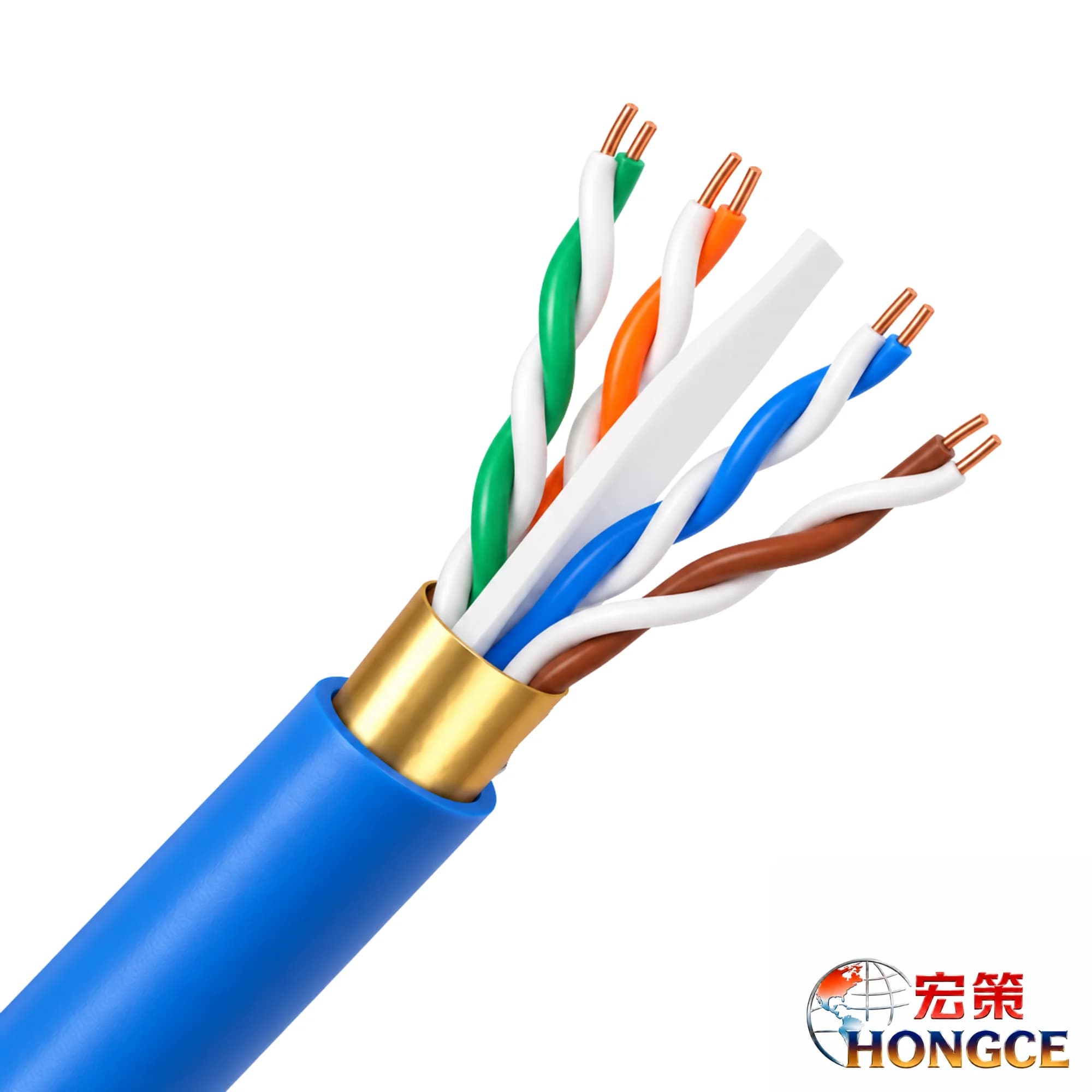
UTP (unshielded twisted pair) is the entry-level CAT6 construction — four twisted pairs in a polyolefin jacket, no shielding. F/UTP adds an overall foil shield. S/FTP adds both braided overall shield and individual pair foil.
UTP is the right choice when EMI exposure is low and PoE budget is moderate (offices, home networks, light commercial). F/UTP or S/FTP are required when the cable routes near power cabling, variable frequency drives, or in high-density data center deployments where bundle bleedover is a real concern.
Verify the supplier's construction claim against the cable cross-section:
- UTP: 4 twisted pairs + central separator (often called the "spline" or "isolation cross") + outer jacket only.
- F/UTP: 4 pairs + spline + aluminum-mylar foil shield + drain wire + outer jacket.
- S/FTP: 4 pairs each in individual foil + overall braided shield + drain wire + outer jacket.
The construction difference shows up clearly under a bench microscope. Suppliers occasionally sell UTP as F/UTP — savings on the foil shield aren't visible without dissection.
For tropical-climate installations (Southeast Asian outdoor enclosures, factory floors with elevated ambient temperature), F/UTP gives meaningful additional resilience to common-mode noise from nearby motor drives. The cost step over UTP is approximately 15-25% — small enough that the spec choice should be made on engineering merit, not budget pressure. Our analysis of BS, IEC, GB standards across Southeast Asia walks through the same buyer-type dynamic at the power cable level.
What CAT6 UTP Sourcing Looks Like for Tropical and Industrial Environments
Southeast Asian network procurement has specific patterns worth flagging.
Office and commercial building networks across Jakarta, Kuala Lumpur, Bangkok, Manila, and Singapore overwhelmingly default to CAT6 UTP at 305m pull-box quantities. Volume orders for new commercial construction range from 100 boxes to 2,000+ boxes for hyperscale data center buildout phases.
Industrial floor networks in tropical climates — palm oil processing, electronics manufacturing, automotive assembly — increasingly specify F/UTP for PoE-powered IP cameras and access points operating near motor drives. The marginal cost is consistently justified by the reduced site survey rework when EMI symptoms surface in commissioning.
Outdoor and direct-burial CAT6 runs require gel-filled jacket variants and UV-stabilized compounds beyond the indoor 305m default. Standard CAT6 UTP isn't rated for outdoor exposure; specifying it for site interconnect leads to UV degradation within 12-18 months in equatorial sun. The Indonesian distribution market specifically — covered in our Indonesia 20kV procurement notes — shows this same outdoor-versus-indoor specification split across Southeast Asian markets.
For project-specific CAT6 UTP supply review, CCA verification testing, or construction matching for industrial-environment networks, see our CAT6 UTP 305m bulk cable. For fiber alternatives where copper UTP isn't sufficient, see GYTA53 outdoor single-mode fiber, and for legacy coaxial network segments, SYV-75-5 coaxial cable.
About the Author
Liangce Chi currently serves as Southeast Asia Market Analyst at Zhejiang Hongce Cable Co., Ltd. His work involves in-depth research covering power infrastructure construction across Southeast Asia, price trends of bulk commodities, and cross-border cable trade compliance. Combining insights from macroeconomic data with extensive hands-on cross-border trade experience, Liangce Chi goes beyond theoretical research and conducts on-site assessments of industrial manufacturing investment climates in Thailand, Vietnam, Indonesia and other Southeast Asian markets. Drawing on his professional work, he secured bulk orders from well-established Thai enterprises for Zhejiang Hongce Cable. This landmark achievement has laid a solid quantitative foundation for the company to further expand its market share of industrial building support cables in Thailand and the broader Southeast Asian region.